
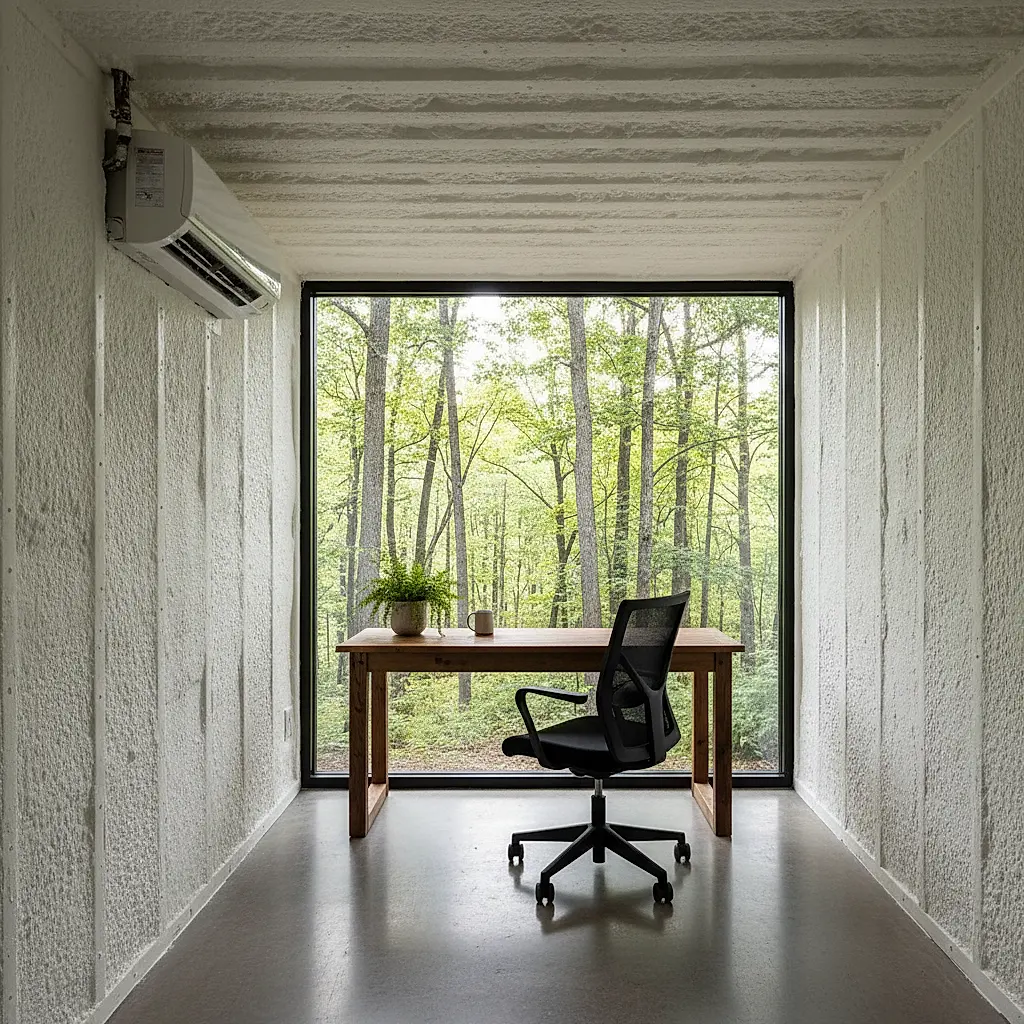
A standard CORTEN steel shipping container is essentially a giant thermal conductor. In the peak of August, interior temperatures can soar to 130°F; in winter, the metal walls draw heat out of the room faster than a space heater can provide it. To transform a raw unit into a functional workspace, understanding shipping container office insulation and hvac costs is the most critical part of your pre-construction budget. Whether you are eyeing R-value for shipping containers for a backyard studio or a heating and cooling shipping container for a job site HQ, the climate control strategy determines whether the space is usable 365 days a year or just a seasonal storage box.
Table of Contents
- 1shipping container office insulation and hvac costs: Breaking Down Shipping Container Office Insulation Costs
- 2HVAC and Climate Control Systems for 2026
- 3Electrical Package for Office Container Requirements
- 4Pre-Insulated Units vs. Custom Modifications
- 5Thermal Bridging and the R-Value Reality in Steel Structures
- 6Determining HVAC Tonnage and Ductless Mini-Split Efficiency
- 7Secondary Climate Controls: Rooftop Coatings and Ventilation
- 8Frequently Asked Questions
- 9Explore Related Products & Guides

shipping container office insulation and hvac costs: Breaking Down Shipping Container Office Insulation Costs
Insulation isn't just about temperature; it's about moisture management. Because steel doesn't breathe, improper insulation leads to 'container rain'—condensation that forms on the interior skin and rots your studs or ruins your electronics. This is why heating and cooling shipping container and offices is the first priority of any build.
For 2026, the spray foam insulation cost remains the most significant line item for high-end builds. Closed-cell spray foam creates a vapor barrier directly against the steel, eliminating the air gap where condensation forms. Expect to pay between $2,200 and $3,500 for professional application in a 20ft unit, depending on your target R-value.
| Insulation Type | Typical R-Value | Est. Cost (20ft Unit) | Best Use Case |
|---|---|---|---|
| Closed-Cell Spray Foam | R-6 to R-7 per inch | $2,200 – $3,800 | Year-round offices, high humidity areas |
| Rockwool (Mineral Wool) | R-3 to R-4 per inch | $1,200 – $1,800 | Dry climates, fire resistance, DIY builds |
| InSoFast Panels | R-8.5 to R-11 | $1,500 – $2,400 | DIY friendly, fast install, space-saving |
| EPS Rigid Foam Board | R-4 per inch | $800 – $1,300 | Budget builds, mild climates |
HVAC and Climate Control Systems for 2026
Once insulated, your container needs a way to move air. A container office mini split installation is the most popular choice for modern conversions. These systems provide both heating and cooling in a single, quiet wall-mounted unit. Because they don't require ductwork, they preserve the limited ceiling height of a standard container—though we always recommend starting with a R-value for shipping containers if you plan to install overhead lighting or drop ceilings.
For industrial job sites, a PTAC unit for container office (the through-the-wall units seen in hotels) is often preferred for its durability and ease of replacement. While less efficient than a mini-split, the upfront hardware cost is lower.
- Mini-Split System (9k - 12k BTU): $1,500 - $3,200 (including install)
- PTAC Unit: $900 - $1,600
- Window A/C with Heat Strip: $500 - $900
- Rooftop RV-style HVAC: $1,200 - $2,000
Always over-spec your BTU cooling capacity by 20% for container offices. Even with great insulation, the thermal mass of the steel can heat up quickly if the unit is placed in direct afternoon sun.
Electrical Package for Office Container Requirements
You cannot talk about HVAC without discussing the electrical package for office container setups. Most mini-split systems require a dedicated 20-amp or 30-amp 220V circuit. If you are buying a shipping container office insulation and hvac costs, ensure the load center is rated for at least 60-100 amps to handle the HVAC, lighting, and office equipment simultaneously.
A standard electrical package typically includes: a breaker box, 4-6 interior outlets, LED shop lights, and the HVAC whip. In 2026, these packages add roughly $1,800 to $3,500 to the base electrical package for office container.

Pre-Insulated Units vs. Custom Modifications
If the logistics of sourcing an HVAC tech and a spray foam contractor seem daunting, consider a pre-insulated office container price. We often recommend starting with a 20ft domestic refrigerated container if you need extreme insulation. While reefers are designed for cold storage, their built-in 3-4 inches of high-density foam provides an incredible R-value. Check our electrical package for office container to see if your site can support the power draw.
Thermal Bridging and the R-Value Reality in Steel Structures
When calculating shipping container office insulation and hvac costs, most buyers overlook the physics of thermal bridging. A shipping container is essentially a six-sided steel radiator. Even if you install high-quality R-15 fiberglass batts between 2x4 studs, the steel studs or the container walls themselves act as a bridge, transferring exterior heat directly into the interior. This thermal bypass can reduce the effective R-value of your insulation by as much as 40%, forcing your HVAC system to work overtime and increasing monthly operational expenses.
To combat this, professional builders utilize 'continuous insulation' strategies. This involves a layer of rigid foam or spray foam that covers the corrugated metal ribs entirely before the internal framing is applied. While this increases the initial material cost by approximately $1.50 to $2.75 per square foot, it prevents condensation—a common killer of container offices—by keeping the dew point outside of the wall cavity. Without this, moisture will collect on the cold steel behind your drywall, leading to mold and structural rust that is hidden from view.
| Insulation Type | Estimated Cost (Installed) | Effective R-Value | Space Loss (Inches) |
|---|---|---|---|
| Closed-Cell Spray Foam | $2,200 - $3,800 | R-6.5 to R-7 per inch | 2" to 3" |
| Rigid EPS/XPS Boards | $900 - $1,600 | R-4 to R-5 per inch | 1.5" to 4" |
| Mineral Wool Batts | $600 - $1,100 | R-3.7 to R-4.2 per inch | 3.5" (Standard Stud) |
| Ceramic Reflective Paint | $400 - $700 | N/A (Emissivity focus) | 0" |
Never use standard fiberglass batts without a high-quality vapor barrier in high-humidity climates. The corrugated nature of the container makes it nearly impossible to seal perfectly, leading to trapped moisture against the steel shell.
Determining HVAC Tonnage and Ductless Mini-Split Efficiency
Sizing an HVAC system for a shipping container office is not the same as sizing for a traditional stick-built room. A standard 20ft container office (roughly 160 square feet) usually requires a 9,000 to 12,000 BTU unit. However, if the unit is located in direct sunlight in a region like Texas or Arizona, the cooling load increases significantly due to solar gain on the roof. A 40ft container office (320 square feet) almost always requires a 18,000 BTU unit or two separate 9,000 BTU heads to ensure even air distribution across the long, narrow footprint.
Ductless mini-split systems are the industry standard for container modifications because they do not require bulky ductwork that would lower the already limited 8'6" ceiling height (or 9'6" for High Cubes). These systems are highly efficient, often boasting SEER2 ratings of 20 or higher, which significantly lowers the long-term cost of ownership. The installation requires a 3-inch hole saw cut through the steel, which must be properly flashed and sealed to prevent leaks. Expect professional installation labor to add $800 to $1,500 to the equipment cost.
- Single-Zone Mini-Split (9k-12k BTU): $1,200 - $2,500 installed.
- Through-the-Wall AC/Heat Units (PTAC): $800 - $1,600 installed (Loud but cost-effective).
- Window Units: $300 - $600 (Not recommended for permanent office use due to security risks).
- Roof-Mounted RV AC Units: $1,100 - $1,900 (Ideal for mobile offices but less efficient).
If you are in a cold climate, ensure your mini-split has a 'Hyper-Heat' or 'Low Ambient' kit. Standard heat pumps lose efficiency rapidly once temperatures drop below 30°F, potentially leaving your office freezing in mid-winter.
Secondary Climate Controls: Rooftop Coatings and Ventilation
The rooftop of a shipping container office is the primary source of heat ingress. Even with high-end interior insulation, the steel surface can reach temperatures exceeding 150°F in the summer. One of the most cost-effective ways to reduce your HVAC load—and therefore your equipment costs—is the application of a white elastomeric roof coating. These coatings reflect up to 90% of solar radiation, often dropping the interior ambient temperature by 10-15 degrees before the AC even kicks in.
Passive and active ventilation are also critical components of the climate control budget. For storage-heavy offices or containers that house servers and electronics, a louvered vent system or a solar-powered exhaust fan is essential. These components prevent the 'oven effect' during weekends when the main HVAC might be turned off. Incorporating these into your initial build avoids the much higher cost of retrofitting them once the interior walls and electrical systems are already finalized.
- 1Phase 1: Apply reflective roof coating (Cost: $200 - $500 for DIY kits).
- 2Phase 2: Install intake and exhaust louvers for cross-ventilation.
- 3Phase 3: Size the HVAC based on 'worst-case' seasonal temperatures for your zip code.
- 4Phase 4: Integrate a smart thermostat to manage peak load times and reduce commercial energy rates.
Combining a white roof coating with closed-cell spray foam insulation can reduce your annual energy consumption by up to 35% compared to a standard dark-painted container with fiberglass insulation.
Frequently Asked Questions
Quick Cost Summary
A basic 20ft office fit-out with R-13 insulation and a mini-split typically costs between $4,500 and $7,500 on top of the container price.