
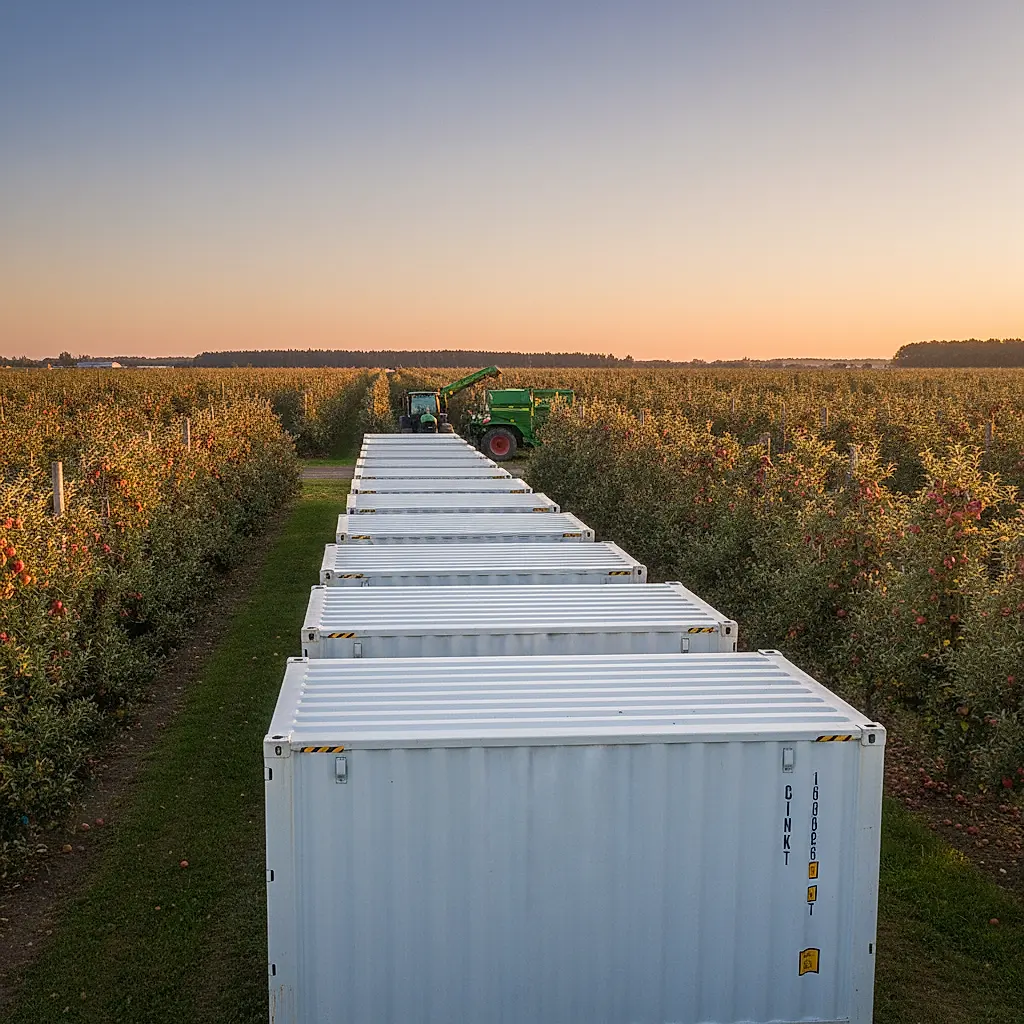
For American growers and processors, August is the month where logistics meets reality. The 2026 season looks to bring record yields in several regions, yet fixed cold storage infrastructure remains stagnant due to high construction costs and interest rates. When your primary warehouse reaches 100% capacity, you don't just lose space—you lose the ability to maintain the cold chain, risking thousands in spoiled inventory. Utilizing seasonal cold storage for harvest overflow 2026 is the most effective way to scale your footprint without the $200-per-square-foot price tag of permanent builds.
Table of Contents

seasonal cold storage for harvest overflow 2026: Why Mobile Cold Storage for Farms is Essential in 2026
Modern mobile cold storage for farms offers a plug-and-play solution for what the industry calls 'The Harvest Glut.' These are ISO-standard refrigerated containers (reefers) equipped with heavy-duty cooling units like Carrier ThinLINE or Thermo King Magnum Plus. Unlike traditional walk-ins, these units are designed to withstand the rigors of global shipping, meaning they are over-engineered for static farm use. They offer T-bar flooring for superior airflow, ensuring that even pallets at the very back of the unit maintain the same core temperature as those near the door.
Choosing harvest overflow refrigeration solutions allows you to keep product on-site, reducing the carbon footprint and transportation costs associated with moving produce to off-site third-party logistics (3PL) providers. In 2026, the average cost to store at a 3PL has risen by 12%, making the ROI on a purchased or long-term leased container even more attractive.
Evaluating 2026 Agricultural Cold Storage Costs
Understanding the financial landscape of 2026 agricultural cold storage costs is vital for harvest budgeting. Prices vary based on the age of the machinery and the container's structural condition. While a 20ft new refrigerated shipping container provides the highest reliability and lowest energy consumption, many farms find that buying used reefer for harvest provides a faster payback period.
| Unit Type | Estimated 2026 Purchase Price | Monthly Rental (Peak Season) | Capacity (Standard Pallets) |
|---|---|---|---|
| 10ft Compact Reefer (Used) | $6,500 - $8,500 | $650 - $900 | 4 - 5 |
| 20ft Standard Reefer (Used) | $8,500 - $12,500 | $850 - $1,200 | 8 - 10 |
| 40ft High Cube Reefer (Used) | $11,000 - $16,000 | $1,100 - $1,500 | 18 - 20 |
| 40ft High Cube Reefer (New) | $24,000 - $32,000 | $2,200 - $2,800 | 20 - 22 |
Note: On-site cold storage rental prices usually do not include the cost of delivery or the final pick-up fee. Always factor in a mobilization cost of $500–$1,500 depending on your distance from the depot.
Operational Logistics: Portable Fruit and Vegetable Storage
When deploying seasonal cold storage for harvest overflow 2026, site preparation is the most overlooked phase. Reefer units are heavy; a 40ft high cube can weigh over 9,000 lbs empty. During harvest, when the ground might be soft from autumn rains, placing these units on a level, packed gravel pad or concrete is essential. If the unit leans, the condensate drains can clog, leading to water buildup and potential mold growth. Seasonal Cold Storage for Harvest Overflow 2026
- Power Requirements: Most reefers require 460V 3-Phase power, though 230V 3-Phase is an option. Ensure your transformer can handle the starting amperage.
- Airflow Clearances: Maintain at least 5 feet of clearance in front of the refrigeration motor for heat dissipation.
- Loading Strategy: Leave 6 inches of space at the top (above the red line) to allow the 'air throw' to reach the back of the container.
- Pre-Cooling: Always pre-cool the container before loading warm produce to prevent the machinery from overworking.
Cold Chain Management for Small Farms
Effective mobile cold storage for farms isn't just about getting things cold; it's about humidity and ethylene control. For example, if you are looking for temporary refrigerated warehouse space to store apples, you must account for the fact that apples release ethylene gas which can prematurely ripen nearby leafy greens. Reefer containers allow for 'modular separation,' where you can dedicate a mobile cold storage for farms to one crop and a 40ft high cube refrigerated container to another, preventing cross-contamination. Seasonal Cold Storage for Harvest Overflow 2026

Optimizing Refrigerated Container Infrastructure for 2026 Climate Volatility
Agricultural planning for the 2026 season requires a shift in how farmers perceive temperature stability. As global weather patterns continue to trend toward extreme heat spikes during late-summer harvest windows, the reliance on traditional barn cooling is becoming a significant financial liability. Modern refrigerated containers, or 'reefers,' offer a precise hermetic seal that prevents the ingress of humid air, which is the primary driver of premature fruit senescence. By deploying these units directly at the field edge, producers can remove field heat within minutes of picking, effectively 'locking in' the metabolic state of the crop and extending its marketable life by up to twenty-five percent compared to delayed cooling cycles. Seasonal Cold Storage for Harvest Overflow 2026
The 2026 technological standard for these units involves integrated telematics that allow for remote monitoring via satellite or 5G networks. For farmers managing overflow across multiple non-contiguous plots, this means the ability to adjust setpoints for specific crops—such as dropping a unit to 33°F for leafy greens or maintaining a steady 45°F for stone fruits—from a centralized smartphone interface. This granular control is no longer a luxury but a necessity to meet the stringent Audit requirements of major wholesale distributors who now demand continuous cold-chain logs. A single failure to document temperature consistency can result in the rejection of an entire shipment, making the precision of a dedicated reefer far superior to makeshift cold rooms.
Furthermore, the structural integrity of 2026-spec shipping containers provides a unique advantage in pest management and biosecurity. Unlike modular wooden structures or retrofitted trailers, the stainless steel interior linings of high-cube reefers are non-porous and easily sanitized with food-grade pressurized washes. This prevents the buildup of fungal spores and ethylene-producing bacteria that often linger in the crevices of older storage facilities. When dealing with high-value organic yields, the ability to maintain a sterile, controlled environment directly translates to higher grade-out percentages and reduced waste, ensuring that the 'overflow' harvest actually reaches the market rather than the compost pile. Seasonal Cold Storage for Harvest Overflow 2026
Energy efficiency in the 2026 market has also seen a paradigm shift with the introduction of variable-frequency drives (VFDs) in container compressors. These systems no longer operate on a simple on-off cycle, which traditionally caused massive surges in power consumption and placed strain on rural electrical grids. Instead, modern units ramp up cooling intensity based on the thermal load of the incoming harvest, then throttle down to a low-energy maintenance mode once the core temperature is stabilized. This efficiency is critical for farms utilizing solar-hybrid power systems or those limited by the peak amperage of their existing utility hookups, allowing for the operation of multiple units without upgrading the entire farm's electrical infrastructure.
- Advanced airflow floor grates (T-bar flooring) ensure vertical air movement through palletized crates.
- Dual-voltage capabilities (230V/460V) allow for flexible deployment across different power sites.
- Environmentally friendly refrigerants like R-513A minimize the carbon footprint of the storage operation.
- Interior emergency release handles and high-intensity LED lighting for operator safety during night harvests.
- Redundant cooling systems available on specialized units to prevent total crop loss during mechanical failure.
To maximize energy efficiency in 2026, always pre-chill your container for 2 hours before loading. Loading warm produce into a hot container creates a 'thermal wall' that forces the compressor to work at maximum capacity, significantly increasing your utility costs for the first 24 hours. Seasonal Cold Storage for Harvest Overflow 2026
Financial Modeling: Rental vs. Acquisition for Peak Harvest Cycles
When analyzing the 2026 budget for seasonal cold storage, the decision between a short-term rental and a capital purchase hinges on the duration of your 'overflow' window. Typically, if your storage needs exceed four months of the year, the amortization of a purchased 20ft or 40ft reefer becomes significantly more attractive. Current market data suggests that a 40ft high-cube refrigerated container retains approximately 70% of its value over a five-year period, making it a liquid asset that can be resold if farm operations shift. Conversely, for specialty growers with a concentrated six-week harvest, the rental model eliminates the burden of year-round maintenance and off-season storage fees, allowing for a strictly operational expense (OpEx) approach. Seasonal Cold Storage for Harvest Overflow 2026
Hidden costs often overlooked in previous years include the 'last mile' delivery and leveling fees, which have stabilized but remain a factor in 2026 logistics. A reefer must be perfectly level to ensure the drainage of condensation and the proper sealing of the heavy rear doors. Budgeting for a prepared gravel pad or concrete footings is essential to prevent the unit from sinking during spring thaws or heavy rain events. Furthermore, farms must account for the cost of 3-phase power installation if it is not already available. While phase converters exist, they can be inefficient; many 2026 producers are opting for dedicated 460V drops to maximize the cooling speed of their overflow units during the critical first four hours of post-harvest loading. Seasonal Cold Storage for Harvest Overflow 2026
The ROI of mobile cold storage is also influenced by the 'market timing' strategy it enables. In 2026, commodity prices for items like blueberries, apples, and leafy greens are expected to fluctuate wildly based on regional supply shocks. Having on-site cold storage allows a grower to hold their product for 10 to 14 days during a price trough and wait for a market rebound. This ability to bypass the 'sell-it-or-smell-it' pressure of perishables often pays for the container's annual cost in a single season. The container essentially acts as a financial hedge, providing the producer with leverage against distributors who capitalize on the lack of storage options at the farm level. Seasonal Cold Storage for Harvest Overflow 2026
Tax incentives for 2026 also favor the acquisition of mobile cold storage units. Under updated agricultural equipment depreciation rules, these containers often qualify for accelerated depreciation, allowing farmers to write off a significant portion of the purchase price in the first year. This is particularly beneficial for operations looking to offset high profits from a successful harvest year. When compared to the cost of building a permanent refrigerated warehouse—which involves zoning permits, property tax increases, and months of construction—a shipping container solution provides an immediate, scalable, and tax-efficient alternative that can be moved or sold as the business evolves. Seasonal Cold Storage for Harvest Overflow 2026
| Storage Metric | 20ft Refrigerated Container | 40ft High-Cube Reefer | Traditional Cold Room (Fixed) |
|---|---|---|---|
| Pallet Capacity | 10 Standard Pallets | 20-22 Standard Pallets | Variable (High Construction Cost) |
| Typical 2026 Rental (Monthly) | $950 - $1,300 | $1,400 - $1,900 | N/A (Fixed Asset) |
| Power Requirement | 3-Phase 230V/460V | 3-Phase 230V/460V | Dedicated Industrial Drop |
| Mobility Score | High (Tilt-bed Truck) | Moderate (Side-loader) | None (Permanent) |
Check your local 2026 zoning laws regarding 'temporary structures.' While most jurisdictions view shipping containers as portable equipment, some counties have recently introduced duration limits for containers placed on agricultural land without a permanent foundation. Seasonal Cold Storage for Harvest Overflow 2026
Maintaining Product Integrity: Ethylene and Humidity Management
The science of harvest overflow in 2026 goes beyond simple thermometer readings. One of the most significant risks in a high-density storage environment is the buildup of ethylene gas, a natural ripening hormone emitted by many fruits. In the confined space of a shipping container, ethylene levels can spike rapidly, causing sensitive crops like broccoli or floral products to degrade overnight. Modern 2026 reefer units for agricultural use now often include adjustable fresh air exchange vents. These vents allow for a controlled introduction of outside air, purging the ethylene while maintaining the internal temperature, a feature that was previously only found in high-end industrial cold storage facilities. Seasonal Cold Storage for Harvest Overflow 2026
Relative Humidity (RH) is the second pillar of successful seasonal storage. Leafy greens require RH levels between 90% and 95% to prevent wilting, whereas onions and garlic require much lower levels to prevent rot. Shipping containers are naturally de-humidifying environments because the cooling coils strip moisture from the air. In 2026, sophisticated growers are using ultrasonic humidification kits that integrate directly with the container's control system. This allows the user to maintain a 'wet' environment for specific crops, ensuring that weight loss due to transpiration is minimized. Every percentage point of water weight retained is a direct increase in the final sale price at the scale. Seasonal Cold Storage for Harvest Overflow 2026
Airflow dynamics within the container must also be managed to prevent 'hot spots.' Even the most powerful 2026 refrigeration unit cannot cool a pallet that has been wrapped in non-breathable plastic or stacked too tightly against the walls. The T-bar floor design of shipping containers is specifically engineered to push cold air up through the bottom of the pallets, but this requires a clear return-air path at the front of the unit (near the machinery). Farmers should train harvest crews on the 'red line' rule: never stack produce above the red load line marked on the container walls. Obstructing the ceiling airflow creates a short-circuit where the air returns to the cooling unit before it has reached the back of the container, leading to rapid spoilage of the rear-most pallets.
Finally, the integration of data loggers provides an insurance policy against equipment failure or human error. In 2026, independent Bluetooth or LoRaWAN sensors are commonly placed at the top, middle, and bottom of the load to provide a comprehensive thermal map. If a door is left slightly ajar or a compressor starts to lose efficiency, these sensors trigger an immediate alarm. This multi-layered approach to storage—combining the physical ruggedness of the container with the precision of digital monitoring—ensures that the overflow harvest of 2026 is not just stored, but preserved in peak condition for the highest possible return on investment. Seasonal Cold Storage for Harvest Overflow 2026
Frequently Asked Questions
Addressing the most common concerns regarding seasonal cold storage for harvest overflow 2026.
Conclusion
Managing harvest gluts requires foresight and reliable equipment. Whether you are looking at buying used reefer for harvest for a three-month window or investing in a permanent fleet of used reefers, the flexibility of containerized storage is unmatched. By planning your electrical and site needs in August, you ensure that when the crop is ready, your storage is ready too. Seasonal Cold Storage for Harvest Overflow 2026
If you're ready to compare inventory for your project, our team can pull matching units from our nationwide depots to ensure you have the capacity you need before the peak season rush begins. Contact Outback Shipping Containers today for a customized quote on refrigerated units and shipping container delivery cost per mile.