
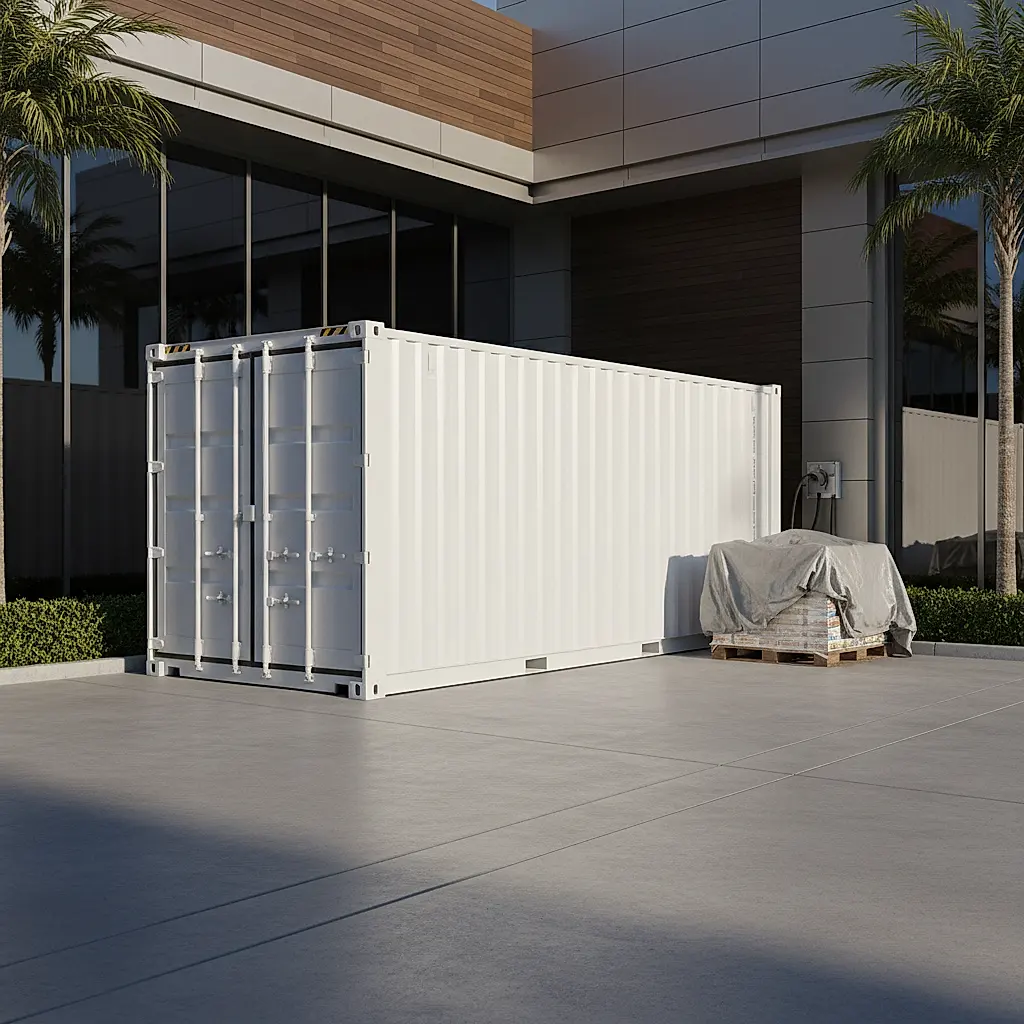
For restaurant owners, the 'space wall' is a real operational bottleneck. When your walk-in is bursting at the seams before a holiday rush or a large catering contract, the immediate instinct is to look at permanent brick-and-mortar expansion. However, the commercial refrigerated container cost for restaurants 2026 has remained significantly lower than traditional construction, leading to a surge in portable adoption. These units, often called 'reefers,' provide instant food-grade storage that can hold temperatures from -20°F to +70°F, making them the most versatile asset for restaurant inventory overflow storage.
Table of Contents

Breaking Down Commercial Refrigerated Container Cost for Restaurants 2026

In 2026, pricing for refrigerated units is driven by two main factors: the age of the machinery and the phase of the electrical motor. While a 40ft high cube shipping container used for dry storage might be relatively inexpensive, a reefer is a complex piece of climate-control machinery. Unlike standard units, these feature T-grade aluminum flooring for airflow and high-density polyurethane foam insulation sandwiched between stainless steel or Corten steel skins.
| Unit Type | Estimated 2026 Price Range | Best Use Case |
|---|---|---|
| 20ft Used Reefer (3-Phase) | $8,500 - $12,500 | Standard bulk frozen/chilled storage |
| 20ft Refurbished (Single Phase) | $14,000 - $19,000 | Restaurants without 460V industrial power |
| 40ft HC Used Reefer (Working) | $11,000 - $16,000 | High-volume inventory & seasonal overflow |
| New (One-Trip) 20ft Reefer | $24,000 - $32,000 | Long-term primary cold storage |
When comparing reefer container pricing 2026, remember that 'Working' vs. 'Non-Working' is the most critical distinction. A non-working unit is essentially just an insulated box, whereas a 'working' unit has been bench-tested, pre-tripped (PTI), and cleared for food storage. If you are looking for a reliable electric refrigerated container for sale, always insist on a recent PTI report.
Portable Walk-In Cooler Cost vs. Traditional Construction
The typical portable walk-in cooler cost for a custom-built 8x20 exterior unit often exceeds $35,000 when you factor in the concrete pad, specialized refrigeration contractors, and permitting for a permanent structure. By contrast, an electric refrigerated container for sale utilizes the existing ISO container frame, which is already engineered for extreme environments and heavy floor loads.
- Lower Initial Capex: Containers cost 40-60% less than equivalent square footage in permanent cold rooms.
- Mobility: If your restaurant moves or you lose your lease, the storage goes with you.
- Resale Value: Unlike a built-in cooler, a reefer can be sold back into the secondary market easily.
- Rapid Deployment: Delivery typically takes 7-14 days compared to months of construction.
Most standard reefers require 460V 3-Phase power. If your restaurant only has 208V/230V Single Phase, you must specify a Single-Phase conversion. This modification typically adds $3,500 to $6,000 to the base price but is essential for standard retail locations.
Key Features of Restaurant Freezer Storage Solutions
When sourcing electric refrigerated container for sale, the specs matter more than the paint. For restaurant use, you want a unit that handles frequent door openings. Standard 'swing doors' on containers are heavy; many restaurants opt for a custom butcher door or strip curtains to maintain internal temperatures during high-traffic periods.
If you are planning for reefer container pricing 2026, consider the logistics of the 'gooseneck tunnel.' A 40ft High Cube reefer will have an indentation in the floor at the front to allow for specific trailer chassis types. While this doesn't impact storage volume, it is something to note for floor-loading pallets. For smaller footprints, the electric refrigerated container for sale are usually the sweet spot for parking lot placement.
Operational and Maintenance Costs
Beyond the purchase price, you must budget for electrical consumption. A modern Carrier or Thermo King unit is remarkably efficient, but it will still be a primary line item on your utility bill. You can find more detail on this in our reefer container pricing 2026. Expect to spend approximately $150 to $400 per month in electricity, depending on your local KWh rate and how often the doors are opened.
Detailed CAPEX Breakdown: Purchase vs. Lease-to-Own in 2026
Heading into 2026, the baseline cost for a new 20ft ISO reefer container (refrigerated unit) is projected to range between $18,500 and $24,000, while 40ft High Cube units will command $26,000 to $33,000. These figures reflect stabilized post-pandemic supply chains but account for increased raw material costs in stainless steel lining and polyurethane insulation. For restaurant owners, the 'all-in' cost isn't just the box; it includes the cooling plant—typically a Carrier or Thermo King unit—which represents approximately 60% of the total asset value. commercial refrigerated container cost
Lease-to-own models have become the primary acquisition strategy for mid-sized restaurant chains looking to preserve cash flow. Monthly payments for a 5-year term typically land between $450 and $850 depending on the unit's age and specs. When evaluating these costs, restaurants must also factor in site preparation, such as a level concrete pad or heavy-duty asphalt, and the electrical infrastructure required to support 460V 3-phase power, which is standard for most industrial-grade refrigerated containers. commercial refrigerated container cost
| Unit Type | Purchase Price (New) | Purchase Price (Used/Refurb) | Est. Monthly Lease |
|---|---|---|---|
| 20' Standard Reefer | $19,000 - $23,000 | $11,000 - $14,500 | $475 - $600 |
| 40' High Cube Reefer | $27,000 - $32,000 | $15,500 - $19,000 | $650 - $850 |
| Dual-Zone (Split) 40' | $35,000 - $42,000 | Rare / Custom Only | $950 - $1,200 |
Pro Tip: Used reefer containers older than 10 years often utilize older refrigerants like R-134a. By 2026, ensure your unit is compatible with low-GWP (Global Warming Potential) refrigerants to avoid future compliance retrofitting costs. commercial refrigerated container cost
Operational Expenses and Energy Consumption Forecast
Beyond the initial commercial refrigerated container cost for restaurants 2026, operational expenses (OPEX) are driven largely by electricity consumption. Modern reefers are significantly more efficient than their predecessors, utilizing variable-speed compressors and digital scroll technology. A standard 20ft unit maintaining a temperature of 35°F (chilled) in a temperate climate typically consumes 2.5 to 4.5 kWh. However, if the unit is utilized as a deep-freeze (-10°F), consumption can spike to 6-9 kWh, significantly impacting the monthly utility bill. commercial refrigerated container cost
Maintenance schedules are a non-negotiable part of the cost equation. Restaurant operators should budget for a semi-annual 'Pre-Trip Inspection' (PTI) style check-up. This ensures the evaporator coils are clear of debris, the door gaskets maintain a vacuum-tight seal, and the drain lines are not obstructed. Neglecting these $300–$500 annual service calls can lead to compressor failure, which carries a replacement cost often exceeding $6,000 in the current market. commercial refrigerated container cost
- Electricity: Expect $150 to $400 per month depending on local utility rates and set temperatures.
- Preventative Maintenance: Budget $800 annually for technician inspections and sensor calibration.
- Component Lifecycle: Internal LED lighting and door hardware generally require replacement every 3-5 years.
- Telematics: Remote monitoring subscriptions (crucial for HACCP compliance) cost $20-$50 per month.
Warning: Industrial reefers require 3-phase power. If your restaurant location only has single-phase power, you will need a phase converter or a transformer upgrade, which can add $3,000 to $7,000 to your initial setup cost. commercial refrigerated container cost
Strategic Advantages of Reefer Containers for 2026 Operations
In an era of rising commercial real estate rents, using the exterior footprint of a property for cold storage is a high-leverage move. Unlike permanent walk-in builds, a shipping container is considered 'equipment' rather than a 'structure' in many jurisdictions, which can lead to favorable tax treatment through Section 179 depreciation. Furthermore, the mobility of these units allows restaurant groups to scale seasonally; a beachside bistro can off-hire or move a unit during the winter months, a flexibility that traditional brick-and-mortar cold rooms cannot match. commercial refrigerated container cost
The durability of ISO-grade containers is also a factor in the 2026 valuation. These units are built to withstand corrosive salt air and extreme stacking pressures on transoceanic vessels. When placed in a stationary restaurant environment, their lifespan easily exceeds 15 years with basic upkeep. This longevity, paired with a high resale value in the secondary market (often retaining 50-60% of value after a decade), makes the total cost of ownership significantly lower than custom-built modular panels which have little to no resale liquidity. commercial refrigerated container cost
- 1Select the right size: 20ft units are easier to permit in tight urban alleys; 40ft units offer 2x the volume for only 30% more cost.
- 2Assess the floor type: T-bar flooring is standard for airflow but may require flat-floor inserts if you use small-wheeled carts.
- 3Check insulation thickness: Ensure a minimum of 3 inches of high-density polyurethane foam for 2026 energy standards.
- 4Plan for delivery: Tilt-bed trailers require 60-100 feet of linear clearance to drop a container safely.
Always request a 'Data Download' from the controller before purchasing a used unit. This log reveals the machine's history of temperature excursions and alarm codes, protecting you from buying a unit with a failing compressor. commercial refrigerated container cost
Frequently Asked Questions
Pro Tip: Inspecting the CSC Plate
Every refrigerated container used for international shipping has a CSC (Convention for Safe Containers) plate. If you're buying for restaurant use, check that the insulation hasn't 'delaminated' (separated from the steel skin), as this drastically reduces thermal efficiency and increases your power bill. commercial refrigerated container cost
Next Steps for Your Cold Storage Project
If you are ready to compare inventory for your project, our team can pull matching units from our nationwide depots. Whether you need a electric refrigerated container for sale for a tight urban lot or a reefer container pricing 2026 for a large-scale distribution hub, we provide the PTI reports and delivery logistics to get you running before the peak season hits. Contact Outback Shipping Containers today for a firm quote including delivery to your site. commercial refrigerated container cost