
Table of Contents
A standard container can hold a surprising amount, right up until a forklift mast, stacked pallet load, tall piece of equipment, or finished ceiling takes away the room you expected to have. High cube shipping containers solve that problem with one practical change: an additional foot of height. For many storage and conversion projects, that extra clearance changes what the container can do.
A high cube is not automatically the best choice for every property or job site. It can require more delivery clearance, may be less available in certain sizes or markets, and can be more container than a simple ground-level storage need requires. The right decision comes down to what you are storing, how you plan to access it, and whether the unit may serve a larger purpose later.
What Makes High Cube Shipping Containers Different?
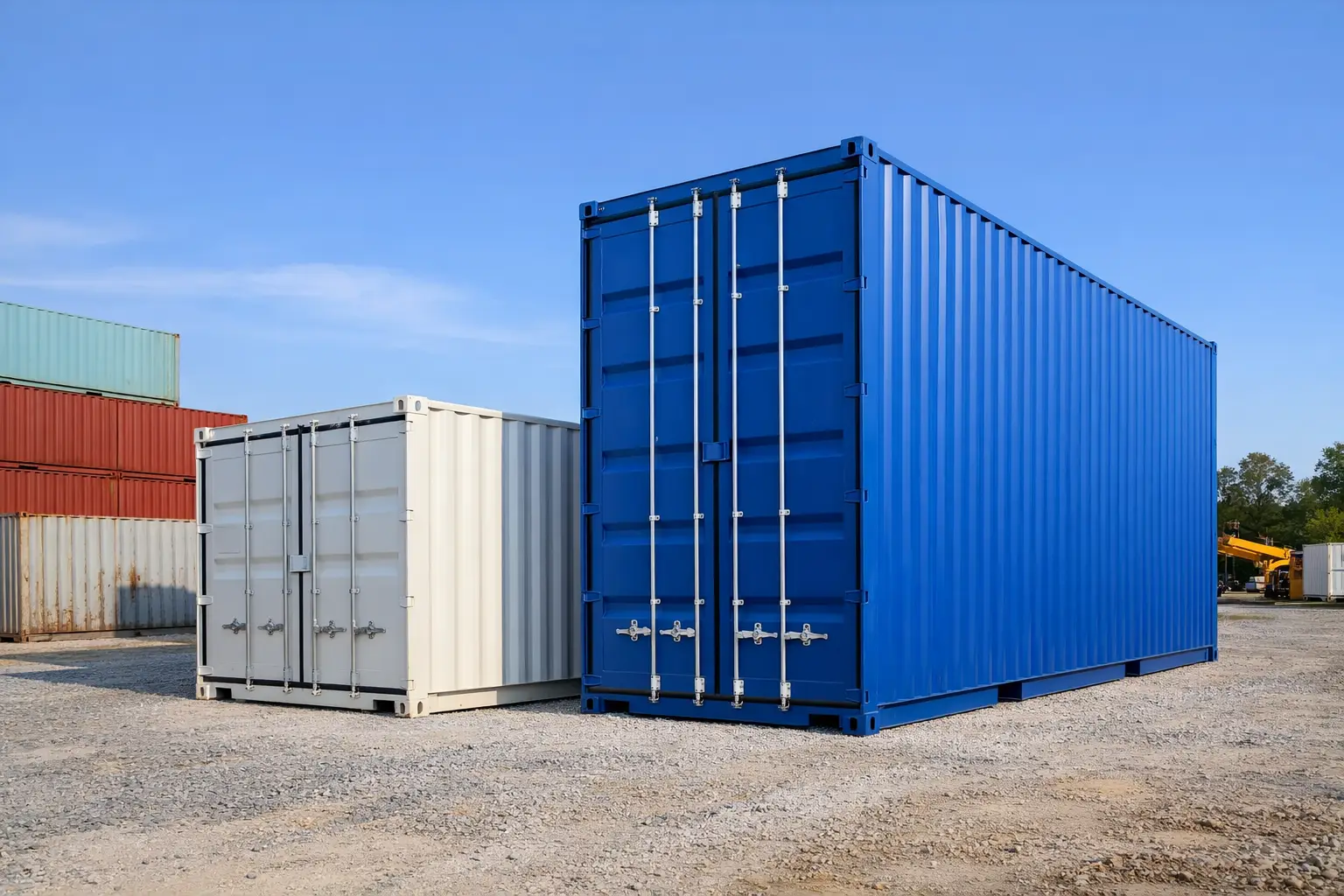
Most standard dry shipping containers are approximately 8 feet 6 inches tall on the exterior. High cube shipping containers are approximately 9 feet 6 inches tall. That one-foot difference carries through to the usable interior height, giving owners more vertical room for cargo, shelving, machinery, and build-outs.
The width and length are generally the same as a comparable standard container. A 40-foot high cube, for example, has the same general footprint as a 40-foot standard unit, but offers more vertical capacity. This makes it a useful option when land area is limited but the project needs more room inside.
High cubes are commonly available in 40-foot lengths, which are popular for commercial storage, agricultural operations, construction sites, and container conversions. Availability of 20-foot high cubes can vary. If a smaller footprint is essential, it is worth confirming current inventory before designing a project around that size.
The extra foot matters most after a build-out
Empty-container dimensions tell only part of the story. When a container becomes an office, workshop, retail space, welfare unit, or living area, interior finishes reduce the available height. Flooring, insulation, ceiling materials, wiring routes, and mechanical equipment all take up space.
In a standard-height container, those additions can make the interior feel tighter than expected. A high cube gives a conversion team more room to insulate and finish the space while preserving a more comfortable ceiling height. It also provides better options for overhead lighting, ductwork, cable trays, and storage racks.
When a High Cube Container Is the Right Choice
High cube containers work especially well when vertical space is part of the operational plan rather than an afterthought. A contractor storing ladders, scaffolding components, job-site materials, and tools may benefit from taller rack systems and cleaner organization. A farm or ranch may need room for equipment parts, feed-related supplies, or seasonal inventory that stacks high.
For businesses, extra headroom can improve how efficiently a container is loaded and accessed. Taller palletized goods, bulky packaging, commercial fixtures, and oversized tools can fit with less rearranging. That may reduce the time spent unloading and searching for materials on a busy site.
A high cube is also a strong starting point for custom projects. Container offices often benefit from the more open feel, particularly when they need lighting, insulation, windows, electrical layouts, and climate-control equipment. The same is true for container homes, studios, workshop spaces, pool equipment enclosures, and other purpose-built units where finished interior space matters.
If the container will remain basic storage for hand tools, lawn equipment, boxed household goods, or lower-profile supplies, a standard container may do the job just as well. Choosing the high cube makes the most sense when the height will be used, not simply because more capacity sounds better on paper.
High Cube Shipping Containers for Storage and Worksites
Storage needs are rarely static. A container bought to protect equipment during a construction project may later become permanent property storage. A unit used for business inventory may eventually need shelving, workbenches, or a small office area. Planning for that possibility can make a high cube a smarter long-term purchase.
For job sites, the added height supports more efficient vertical storage. Properly selected shelving and rack systems can help separate fast-moving supplies from larger or less frequently used materials. The goal is not to stack everything to the roof. It is to create room to work, retrieve items safely, and keep expensive equipment from being buried behind other equipment.
For homeowners and rural property owners, the benefit may be less about industrial organization and more about flexibility. A high cube can hold furniture, recreational equipment, workshop supplies, or property-maintenance tools while still leaving room for future shelving or a work surface. That flexibility is useful when a garage, barn, or outbuilding is already full.
Consider the door opening, not only the container height
Buyers often focus on interior volume and overlook how items will get through the doors. High cube containers typically have a taller door opening than standard units, but the doorway still has defined width and height limits. Measure the tallest and widest item that needs to enter, including its pallet, wheels, handles, or protective packaging. high cube shipping containers
Also consider the route to the doors. Uneven ground, turning space, loading equipment, and the direction the doors will face can affect day-to-day usability. A container that is easy to deliver but awkward to load may create a recurring operational problem.
Delivery Planning for a Taller Container
The added foot of height matters before the container reaches your property. Delivery access should be reviewed for low tree limbs, overhead wires, gates, building overhangs, and tight entrances. A high cube has a taller profile during transport and after placement, so clear access is more important than it may be with a standard-height unit. high cube shipping containers
The site itself should be stable, level, and accessible for the delivery process. Think through where the truck will approach, where the container will sit, and which end needs to face outward. If you need regular access to the cargo doors, leave enough room for both doors to swing open and for people or equipment to move around them. high cube shipping containers
Outback Shipping Containers supports nationwide delivery, including projects across the contiguous United States. Sharing clear site details and intended placement with the sales team early helps match the container and delivery arrangement to the actual conditions on your property. high cube shipping containers
New, Used, or Custom High Cube Containers?
Condition and configuration should follow the job. A new container may be the preferred route when appearance, consistency, and a fresh starting point are priorities. A used container can be a practical option for many storage applications, provided the buyer selects a unit appropriate for the intended use and understands its condition before purchase. high cube shipping containers
Custom work changes the conversation further. If the container needs personnel doors, windows, electrical components, insulation, interior finishes, ventilation, partitions, or a specialized layout, start with the finished use instead of selecting a container first. The right high cube conversion is planned around people, equipment, workflow, and access points. high cube shipping containers
A 40-foot high cube offers generous space for larger conversions, but it is not always necessary. A 20-foot unit may be better for a compact office, a property with limited placement space, or a project that needs a smaller footprint. Multiple containers can also be considered when separating storage, work areas, and equipment makes more sense than forcing every use into one large unit.
Questions to Answer Before Requesting a Quote
Before requesting a quote, have a clear picture of the load, site, and future use. Start with the tallest item you need to store and whether it will be moved by hand, pallet jack, forklift, or other equipment. Then consider whether you need open floor area, vertical shelving, a finished interior, or room for mechanical systems. high cube shipping containers
It also helps to decide whether the container is a short-term storage answer or part of a permanent operational setup. That distinction can influence the size, condition, door configuration, and customization choices that make sense. Photos of the delivery path and placement area can make early planning more accurate. high cube shipping containers
The best container is the one that fits the work you need it to do now and leaves room for the work it may need to do next. When that work depends on vertical clearance, a high cube gives you a practical extra foot that is difficult to add later. high cube shipping containers