
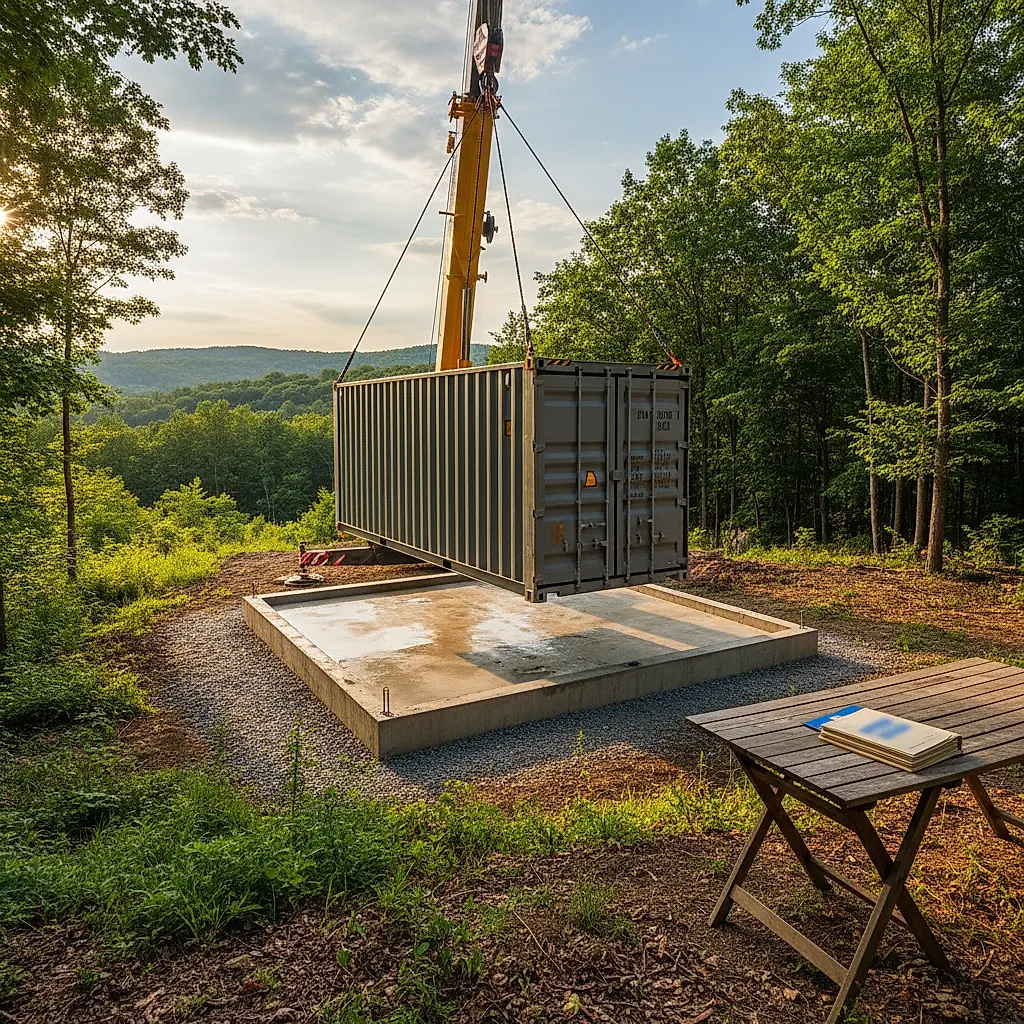
Before you authorize a $5,000 delivery for a residential shipping container zoning, you must clear the regulatory hurdles set by your local Authority Having Jurisdiction (AHJ). In 2026, navigating shipping container zoning laws by county 2026 has become a nuanced process, as officials distinguish between 'temporary storage' and 'permanent structures.' While state-level mandates in places like California or Florida have streamlined Accessory Dwelling Unit (ADU) approvals, the final word on placement, setbacks, and aesthetics remains at the county level. Failing to account for these rules doesn't just result in a fine; it can lead to a 'Notice to Abate' that forces the removal of your unit at your expense.
Table of Contents
- 1shipping container zoning laws by county 2026: Unincorporated Land Shipping Container Rules vs. City Limits
- 2Residential Shipping Container Zoning and ADU Standards
- 3Zoning Board Approval for Conex Boxes: The Process
- 4Temporary Structure Permit vs Zoning
- 5The 2026 Zoning Landscape: Permitted Uses by Land Classification
- 6Environmental Siting and Setback Requirements for 2026
- 7Navigating Foundation Mandates and Tie-Down Compliance
- 8Frequently Asked Questions
- 9Summary of 2026 Compliance
- 10Explore Related Products & Guides

shipping container zoning laws by county 2026: Unincorporated Land Shipping Container Rules vs. City Limits
The most frequent question we hear is whether unincorporated land shipping container rules are more lenient. Generally, yes. In most US counties, if your property is outside city limits (unincorporated), you are governed by the county's general plan rather than strict municipal aesthetics codes. However, don't mistake 'unincorporated' for 'unregulated.' Even in rural areas, shipping container placement regulations often dictate that a unit cannot sit in a front yard or obstruct a driver's line of sight near a road. If you are planning a large-scale project, such as the Trinity 100ft U-Shape Modular Container Home, you will still need to provide a site plan showing that the structure meets fire separation distances.
Expert Fact
Many counties in 2026 now classify containers as 'non-combustible storage' under the International Building Code (IBC). This often simplifies the permit process for basic storage compared to a wooden shed, but complex residential conversions still require a full set of engineered plans.
Residential Shipping Container Zoning and ADU Standards
If you are looking at shipping container zoning laws by county 2026, the focus shifts from 'where' the container sits to 'how' it is modified. For a residential shipping container zoning to be legal in a residential zone, it must typically be mounted on a permanent foundation. This changes its status from personal property to real estate. Zoning boards also look at the 'minimum lot size for storage containers.' In high-density counties, a container may only be allowed if your lot exceeds 0.5 or 1.0 acres, ensuring the industrial look doesn't impact neighboring property values.
| Classification | Zoning Requirement | Permit Type | Foundation Needed? |
|---|---|---|---|
| Temporary Storage | Setback from property line | Zoning Use Permit | No (Gravel/Blocks) |
| Primary Residence | Residential (R1/R2) Zoning | Building Permit | Yes (Permanent) |
| Backyard Office | ADU/Secondary Structure | Combination Permit | Varies by County |
| Ag Storage | Agricultural Exemption | Often Exempt | No |
Zoning Board Approval for Conex Boxes: The Process
When a project falls outside standard use, you may need zoning board approval for conex boxes. This involves a public hearing where neighbors can weigh in. To increase your chances of approval for units like a residential shipping container zoning, come prepared with a landscaping plan. Many counties will grant a variance if the container is screened from view by a fence or vegetation. We strongly recommend reviewing our shipping container zoning laws by county 2026 to ensure your planned location doesn't conflict with utility easements or septic drain fields, which are common grounds for zoning denial.
Never assume a 'portable' label exempts you. In 2026, many counties define any structure on-site for more than 180 days as permanent, triggering full shipping container building codes by county enforcement, including tax assessments.
Temporary Structure Permit vs Zoning
Understanding the difference between temporary structure permit vs zoning is vital for seasonal users. If you are using a 30 Feet Freezer Container for a harvest season, you might only need a temporary use permit (TUP). These are typically valid for 90 to 180 days and have much lower fees. However, if the container remains after the permit expires, it becomes a zoning violation. For those using containers for business, we suggest reading about minimum lot size for storage containers to understand how to depreciate these assets while staying compliant with commercial zoning.

- Verify your zoning designation (Residential, Agricultural, Industrial).
- Check for Minimum Square Footage requirements—some counties require homes to be at least 800 sq. ft., which may require joining two 40ft units.
- Confirm if the county recognizes the ICC G5-2019 standard for container construction.
- Obtain a 'Letter of Map Amendment' if you are in a flood zone.
- Consult with a licensed engineer for your shipping container zoning laws by county 2026 estimates.
The 2026 Zoning Landscape: Permitted Uses by Land Classification
As we move into 2026, county-level zoning departments across the United States are increasingly differentiating between 'ancillary storage' and 'habitable infrastructure' for shipping containers. In many Agricultural (A-1) and Industrial (I-2) zones, containers are often permitted 'by right,' meaning you do not need a public hearing to place a unit, provided it meets specific setback requirements. However, in Rural Residential (RR) zones, the 2026 standards often require 'architectural integration,' which may include specific cladding or roofing mandates to ensure the unit does not negatively impact neighboring property values.
For buyers in counties like San Bernardino, CA, or Maricopa, AZ, the distinction between a 'permanent' and 'temporary' installation is defined by the foundation. A container placed on gravel may be classified as a temporary structure with a 180-day limit, whereas a unit bolted to a pier or slab foundation falls under permanent zoning codes. This shift in 2026 reflects a nationwide effort to formalize container usage, moving away from the 'gray area' loopholes that existed in previous decades. You must verify if your specific parcel falls under a 'Planned Unit Development' (PUD), as these often have private CC&Rs that override general county zoning allowances.
| Zoning Category | Typical 2026 Status | Key Restriction | Permit Requirement |
|---|---|---|---|
| Agricultural (A-1) | Permitted by Right | Must be 50ft from property line | Low-cost siting permit |
| Industrial (I-1/I-2) | Permitted | Stacking height limits (usually 3 high) | Safety inspection only |
| Rural Residential | Conditional Use | Exterior siding required | Full building permit |
| Commercial (C-2) | Restricted | Screening from public view | Zoning variance often needed |
Pro Tip: Always request a 'Zoning Verification Letter' (ZVL) from your county planning office before purchasing a container. This $50–$150 document provides written proof of what is allowed on your specific parcel, protecting you from future enforcement actions.
Environmental Siting and Setback Requirements for 2026
Modern zoning laws are now deeply intertwined with environmental protection standards. In 2026, many counties have implemented 'impermeable surface' ratios. Because a shipping container is a solid steel block, it counts 100% toward your lot's coverage limit. If your county allows 30% lot coverage and your home already occupies 25%, you may be restricted in the size or number of containers you can legally add. This is particularly critical in coastal counties or areas with high drainage concerns, where runoff management is a primary factor in permit approval.
Furthermore, setback requirements—the distance the container must be from property lines, wells, and septic systems—have become more rigid. In many Western US counties, fire safety setbacks are now non-negotiable. Containers must often be placed at least 30 feet from any brush or 'defensible space' perimeter to comply with updated WUI (Wildland-Urban Interface) codes. Failure to adhere to these setbacks can result in mandatory removal orders, which are significantly more expensive than the initial delivery costs.
- Riparian Buffers: Containers must typically be 50-100 feet away from wetlands or streams.
- Easement Encroachment: Check for utility easements; containers cannot be placed over buried gas or water lines.
- Visibility Setbacks: Street-facing containers in residential areas may require a 25-foot minimum setback behind the front building line.
- Septic Clearance: Maintain at least 10-15 feet of distance from septic tanks and leach fields to prevent soil compaction and pipe damage.
Warning: Placing a shipping container on a steep slope (greater than 15% grade) now triggers mandatory geotechnical engineering reviews in many jurisdictions to prevent soil erosion and sliding hazards.
Navigating Foundation Mandates and Tie-Down Compliance
One of the most significant changes in 2026 county zoning is the focus on structural securement. In hurricane-prone regions like the Gulf Coast or high-wind areas in the Midwest, zoning boards now treat shipping containers similarly to manufactured homes. This means simple 'railroad tie' foundations are being phased out in favor of engineered systems. Modern codes often require twist-lock anchors or heavy-duty weld-plates embedded in concrete footings to prevent the 'sail effect' during extreme weather events.
For those seeking habitable certification, the foundation must also address thermal bridging. In northern counties, zoning offices now require containers to be elevated on piers to allow for a vented crawlspace, preventing the steel floor from conducting frost into the living area. This intersection of building code and zoning ensures that the container remains a stable asset rather than a liability to the local housing stock. When applying for your permit, include a stamped foundation plan to significantly expedite the approval process.
- 1Select Site: Ensure level ground with a minimum 4-inch gravel base for drainage.
- 2Engineer Review: Obtain a structural stamp if the county requires wind-load anchoring.
- 3Pour Footings: Install concrete piers at the four corners (ISO points) of the container.
- 4Anchor Installation: Use heavy-duty bolts or twist-locks to secure the unit to the footings.
- 5Inspection: Schedule a 'pre-placement' foundation inspection with the county building official.
If you are in a seismic zone, ensure your foundation plan includes 'lateral bracing' specifications. Standard gravity-based foundations are rarely sufficient for container zoning approval in high-risk earthquake areas like Western Washington or California.
Frequently Asked Questions
Navigating the legalities of shipping containers can be complex. Here are the most common questions our team addresses regarding shipping container zoning laws by county 2026.
Summary of 2026 Compliance
Whether you are looking for shipping container zoning laws by county 2026 for sale inventory or just planning your dream home, the key is early engagement with your local planning department. The best shipping container zoning laws by county 2026 are those that treat containers as a modern, sustainable building material rather than a nuisance. By following the residential shipping container zoning rules and ensuring your site meets shipping container placement regulations, you can enjoy the cost savings and durability of steel construction without the legal headaches.
If you're ready to compare inventory for your project, our team can pull matching units from our nationwide depots and provide the technical specs your local zoning office will require. Contact Outback Shipping Containers today to start your project with the right foundation.