
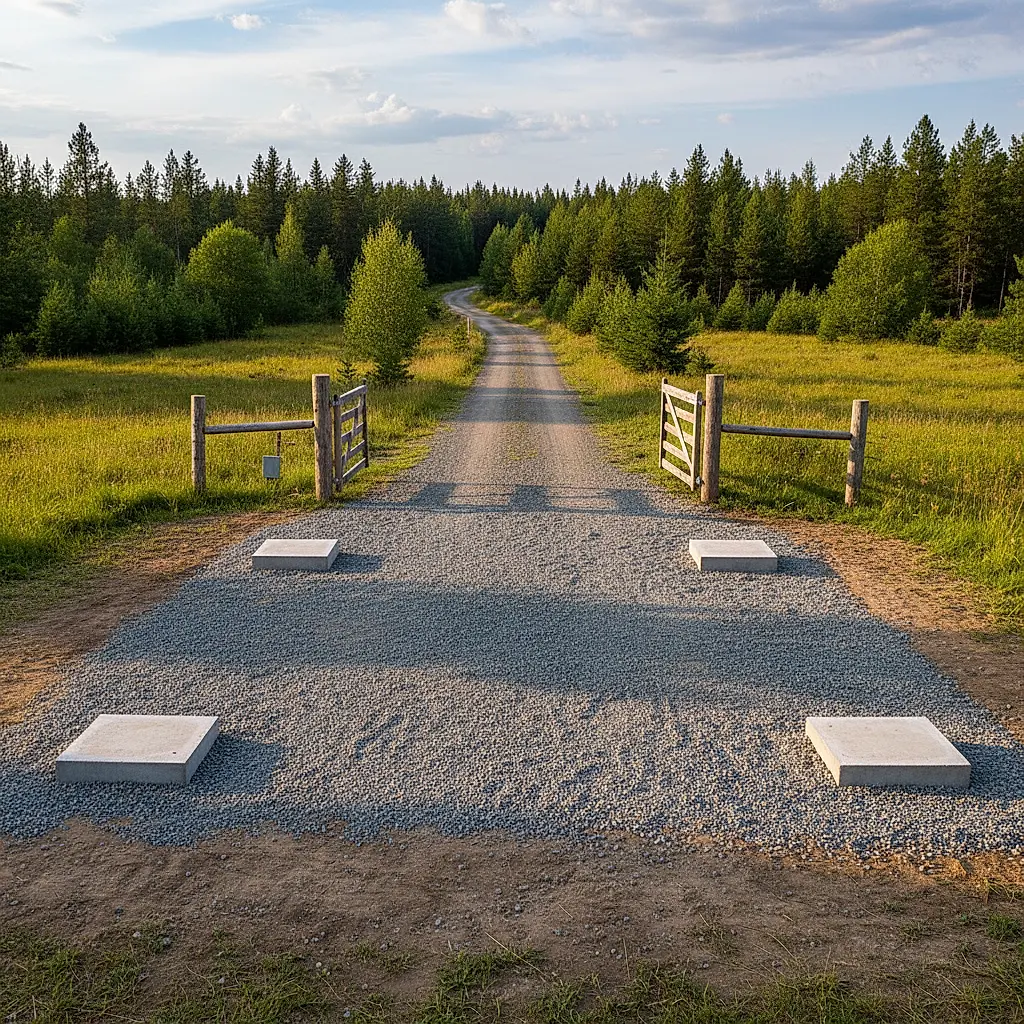
shipping container delivery site prep checklist — Buying a shipping container is the easy part; getting it placed exactly where you want it requires precision. Nothing kills the excitement of a new project like a driver turning away because the ground is too soft or the gate is two inches too narrow. A shipping container delivery failed fee can range from $300 to $800 depending on the distance from the depot, effectively wiping out the savings you found on a preparing land for 40ft container. As we enter the busy August delivery window, preparing your land is the single most important step to ensuring your investment is usable on day one.
Table of Contents
- 1The Shipping Container Delivery Site Prep Checklist
- 2Understanding Tilt Bed Truck Clearance and Access
- 3Surface Requirements: Leveling Ground for Storage Container
- 4Conex Box Delivery Access: Gates, Turns, and Obstacles
- 5Drainage Strategies and Moisture Mitigation Techniques
- 6Strategic Foundation Block Placement and Load Distribution
- 7Permitting and Zoning Compliance for 2026 Regulations
- 8Frequently Asked Questions
- 9Final Steps Before the Driver Arrives
- 10Explore Related Products & Guides
The Shipping Container Delivery Site Prep Checklist

Before the truck leaves the yard, you must verify the physical limitations of your site. Delivery drivers typically use tilt-bed trailers that require significant linear space to slide the container off the rear. This shipping container delivery site prep checklist covers the four pillars of a successful drop: clearance, surface integrity, levelness, and local compliance.
- 1Vertical Clearance: Verify at least 14 feet of overhead clearance along the entire drive path to avoid low-hanging branches or power lines.
- 2Linear Path: A 20ft container needs 60 feet of straight-line clearance; a 40ft unit needs 100 to 120 feet.
- 3Surface Stability: Ensure the ground can support a 45,000lb truck-and-trailer combo without sinking.
- 4Foundation Preparation: Set your corner blocks, gravel pad, or concrete footings before the driver arrives.
- 5Orientation: Decide if the doors should face the truck cabin or the rear of the trailer.

Understanding Tilt Bed Truck Clearance and Access
Most residential and commercial deliveries utilize a tilt-bed truck. The trailer bed lifts at an angle, and the container slides off the back until the edge touches the ground. The truck then pulls forward, leaving the container in place. This is why **tilt bed truck clearance** is non-negotiable. If you are storage container pad requirements units, you must account for the length of the truck (approx. 20ft), the trailer (approx. 45ft), and the container itself (40ft).
Drivers will not risk getting stuck. If your site is muddy or the soil is 'sugar sand,' you must provide a gravel base or wait for a dry spell. A stuck truck results in heavy recovery fees and a failed delivery charge.
Surface Requirements: Leveling Ground for Storage Container
While ISO containers are engineered to be incredibly strong, that strength relies on the four corner castings. If the ground is uneven, the container frame can twist (rack), making the doors nearly impossible to open or close. When **leveling ground for storage container** placement, aim for a variance of less than 1 inch across the entire footprint.
| Foundation Type | Best For | Estimated Cost (2026) | Longevity |
|---|---|---|---|
| Concrete Pavers | Dry, firm soil; 20ft units | $50 - $150 | Moderate |
| Gravel Pad (Crushed Stone) | General storage; drainage | $400 - $900 | High |
| Railroad Ties / 4x4 Lumber | Temporary setups; farm use | $100 - $300 | Low |
| Concrete Slab / Piers | Container homes; heavy workshops | $1,500 - $4,000 | Permanent |
For many agricultural buyers looking at portable cold storage for harvest season, a simple gravel pad is the best balance of cost and performance. It allows for drainage, which prevents the bottom cross-members from rusting prematurely. If you're installing a 40ft High Cube container, the extra foot of height increases the wind load, making a stable, level base even more critical.
Conex Box Delivery Access: Gates, Turns, and Obstacles
Getting the container to the pad is often harder than preparing the pad itself. **Conex box delivery access** requires a minimum width of 12 feet. If your gate is exactly 10 feet wide, a standard truck cannot make the turn. Furthermore, if the truck must turn 90 degrees immediately before the drop site, you need even more width to accommodate the 'swing' of the long trailer.
- Check for overhead wires: Most containers on trailers stand 13'6" to 14' tall.
- Remove tree limbs: Scratches on a new 'One-Trip' unit are cosmetic, but thick branches can damage the truck.
- Inform the driver of culverts: Small bridges or drainage pipes may not support the weight of a loaded trailer.
- Consult your local AHJ: Ensure you have followed storage container pad requirements before the unit is permanently set.
Drainage Strategies and Moisture Mitigation Techniques
One of the most overlooked aspects of shipping container site preparation is the long-term management of water runoff. Even on a perfectly level site, a 40ft High Cube container creates a massive impervious surface area—approximately 320 square feet—that will shed hundreds of gallons of water during a heavy rainstorm. If the ground immediately surrounding the container is not graded to shed water away from the structure, you risk 'ponding' underneath the unit. This constant exposure to high humidity levels will prematurely rot the marine-grade plywood flooring from the bottom up and accelerate corrosion on the steel cross-members.
To prevent structural degradation, consider the sub-base composition before the truck arrives. If your soil has a high clay content, it will retain water and soften under the weight of a 9,000lb empty container. The ideal preparation involves excavating 4 to 6 inches of topsoil and replacing it with compacted 3/4-inch minus crushed stone. This provides a stable, porous surface that allows water to percolate through the ground rather than sitting against the steel. For temporary placements, using vapor barriers or heavy-duty pond liners beneath the block points can reduce ground moisture rising into the undercarriage.
| Soil/Surface Type | Load Bearing Capacity | Drainage Rating | Recommended Preparation |
|---|---|---|---|
| Compacted Gravel | Excellent | High | 6-inch depth with geotextile fabric |
| Asphalt/Concrete | Superior | Zero (Runoff) | Check for cracks; ensure slope for runoff |
| Sandy Soil | Moderate | Excellent | Wide timber sleepers to prevent sinking |
| Clay/Loam | Poor (When wet) | Very Low | Must use gravel pad or concrete piers |
Never place a container directly on bare grass or soil for long-term storage. The lack of airflow will trap moisture, leading to mold growth on the interior floor and structural rust on the bottom rails within 12-18 months.
Strategic Foundation Block Placement and Load Distribution
Shipping containers are designed to be supported at their four corner castings. While the side walls are incredibly strong, the structural integrity of the entire box relies on these specific points. When preparing your site, your primary goal is to ensure the four corners are level with one another, even if the ground itself has a slight slope. If the container is out of level by even an inch over its length, you will experience 'racking,' which makes the heavy cam-lock doors nearly impossible to open or close without a crowbar.
For residential or light commercial sites, concrete paving stones (4x8x16 inches) or pressure-treated 4x4 timbers are the standard choice for shimming. However, you must account for the weight distribution. An empty 20ft container weighs roughly 5,000 lbs, but once fully loaded, that weight can exceed 30,000 lbs. If you are placing the unit on soft ground, you should use 'sleeper' foundations—long timbers that run the width of the container—to spread the load over a larger surface area rather than relying on four small points that may sink unevenly over time.
- Primary Support: Place heavy-duty concrete blocks or pressure-treated wood under all four corner castings.
- Mid-Point Support: For 40ft containers, add an additional support block at the 20-foot mark on each side to prevent sagging.
- Door Alignment: Ensure the end where the doors are located is slightly higher (1/8 to 1/4 inch) than the front to prevent water from pooling against the door seals.
- Leveling Tools: Have a long straight-edge or a transit level ready for the driver to ensure the blocks are perfectly aligned before the container is dropped.
- Clearance Height: Ensure your blocks raise the container at least 4-6 inches off the ground to allow for crucial under-unit ventilation.
Keep a bag of cedar shingles or thin plastic shims on hand during delivery. Drivers are usually happy to wait two minutes while you fine-tune the level of your blocks once the container is partially lowered.
Permitting and Zoning Compliance for 2026 Regulations
As we head into 2026, many municipal zoning boards across the United States have updated their stance on 'Accessory Storage Structures.' Before the truck arrives, you must verify if your container requires a temporary use permit or a permanent structure variance. In many jurisdictions, containers are treated differently if they are placed on a 'permanent foundation' (like a concrete slab) versus a 'portable foundation' (like gravel or blocks). Failing to check these local ordinances can result in expensive code enforcement fines or an order to remove the container within 30 days of delivery.
HOA regulations are often stricter than city codes. If you are in a deed-restricted community, review your bylaws regarding metal buildings and exterior finishes. Many owners find that they can bypass aesthetic complaints by planning for a 'container wrap' or a specific paint color that matches their primary residence. Preparing your site legally is just as important as preparing it physically; ensure your site map shows the container is placed behind the required setback lines (usually 5 to 15 feet from property borders) to avoid neighbor disputes.
- 1Check Local Zoning: Call your county or city building department to ask about 'intermodal shipping containers' as storage units.
- 2Verify Setbacks: Measure the distance from your planned site to the property lines to ensure compliance with fire safety codes.
- 3Assess Utility Lines: Look up! Ensure there are no low-hanging power, fiber optic, or phone lines that a 13.6ft high truck will snag.
- 4Obtain HOA Approval: Get written consent if you live in a managed community to prevent forced removal.
- 5Review Weight Limits: If the delivery truck must cross a driveway or bridge, verify it can handle the 30,000lb+ combined weight of the truck and container.
In many agricultural zones, shipping containers are classified as 'exempt farm buildings,' but you may still need to file a 'Notice of Intent' with the county to maintain your tax status.
Frequently Asked Questions
We address the most common concerns buyers face during the site preparation phase.
How do I prepare my yard for a shipping container?
Clear all debris, level the area using a transit or laser level, and ensure there is a clear path for the truck. Ideally, place four concrete blocks at the corners to keep the unit off the wet ground.
Does a shipping container need a concrete pad?
No, a full slab is not required for storage. However, **storage container pad requirements** dictate that the four corners must be supported by something that won't sink, such as gravel, asphalt, or pressure-treated wood.
How much space does a container delivery truck need?
For a 20ft container, you need 60-75 feet of straight space. For a 40ft container, you need at least 100-120 feet of straight-line clearance.
Can you put a shipping container on grass?
It is not recommended. Grass holds moisture against the steel bottom, leading to corrosion. Over time, the container will also sink unevenly, causing the doors to jam.
What is the best foundation for a 20ft container?
A gravel bed (4-6 inches of compacted crushed stone) is generally considered the shipping container placement guide for durability and drainage.
How level does a container site need to be?
It needs to be within 1 inch of level across the length and width. If the site is significantly sloped, the container's structural integrity is compromised, and doors will not align.
Final Steps Before the Driver Arrives
Double-check your shipping container placement guide notes. Is the door orientation correct? Drivers usually load the container with doors facing the rear so they are the first thing to touch the ground. If you need doors facing the truck cabin, you must specify this at the time of order.
If you are ready to compare inventory for your project, our team can pull matching units from our nationwide depots. Whether you need a simple used 20ft shipping container or a specialized reefer container for the upcoming harvest, we provide detailed photos and logistics support to ensure your site is ready for a successful delivery.