
Table of Contents
A container is most useful when it solves a specific problem on your property or job site. The best shipping container modification ideas start there: protect equipment, create usable work space, add capacity, or turn unused ground into a functional asset. A 10-foot, 20-foot, or 40-foot container can be modified in many ways, but the right design depends on access, layout, climate, utilities, and how the space will be used every day. Shipping Container Modification Ideas
Start With the Container, Not the Add-Ons
Before choosing doors, windows, insulation, or interior finishes, select a container size and type that fits the job. A 10-foot container can work well for compact storage or a small equipment enclosure. A 20-foot unit is a practical middle ground for site storage, workshops, and compact offices. A 40-foot container provides more layout flexibility for larger conversions, inventory storage, and multi-room builds. Shipping Container Modification Ideas
Height matters, too. A high-cube container offers extra interior clearance, which can make a meaningful difference for shelving, ductwork, insulation, finished ceilings, or a more comfortable office environment. Reefer containers are another specialized option when insulated construction or temperature-controlled storage is part of the plan. Shipping Container Modification Ideas
Used containers can be a sensible fit for many storage and conversion projects, while new units may suit buyers who want a cleaner exterior appearance or a more uniform starting point. The modification plan should guide the container choice, rather than forcing a design onto a unit that is too small, too low, or poorly suited to the intended use. Shipping Container Modification Ideas
12 Shipping Container Modification Ideas for Real Use
1. Secure Job Site Storage
Construction teams often need more than an empty box with cargo doors. Adding personnel doors, lock protection, interior shelving, and task lighting turns a container into an organized storage point for tools, fasteners, safety gear, and valuable equipment. A side opening can improve access to long materials or palletized supplies. Shipping Container Modification Ideas
Keep the interior layout simple enough that crews can find and return equipment quickly. Heavy-duty shelving along one wall and clear floor space down the center is often more useful than a crowded custom build. Shipping Container Modification Ideas
2. Container Office
A container office brings supervision, paperwork, meetings, and secure storage closer to the work. Common modifications include personnel doors, windows, insulation, wall finishes, electrical service, lighting, HVAC, and desk-ready interior space. A 20-foot container can support a focused single-office layout, while a 40-foot unit allows more room for workstations, a meeting area, or storage. Shipping Container Modification Ideas
Window placement should follow the site plan. More glass can make a space feel open, but it also affects privacy, sun exposure, and wall space for desks or filing. For active job sites, exterior security features and durable finishes deserve just as much attention as the office interior. Shipping Container Modification Ideas
3. Workshop or Maintenance Bay
For property owners, farm operations, and contractors, a container workshop can keep tools protected and organized close to where repairs happen. Workbenches, pegboard, power outlets, lighting, ventilation, and wide access doors are common upgrades. A high-cube container is especially useful if the workshop will include tall shelving, equipment, or overhead utility runs.
Plan the workflow before installing fixtures. If equipment must move in and out frequently, preserve a clear path from the doors to the work area. If the container will store fuels, chemicals, or batteries, select materials and ventilation appropriate to those contents. Shipping Container Modification Ideas
4. Farm Supply and Feed Storage
Containers offer farmers a durable place to organize feed, seed, fencing supplies, parts, and seasonal tools. Interior racks can separate smaller items, while open floor space accommodates larger equipment or bulk materials. A personnel door may make daily access easier than opening cargo doors every time. Shipping Container Modification Ideas
Temperature and moisture can affect what you store. If the contents are sensitive to heat or humidity, insulation, ventilation, or a reefer-based solution may be worth considering. The right setup depends on the product, local conditions, and how often staff enter the unit. Shipping Container Modification Ideas
5. Climate-Controlled Product Storage
Refrigerated reefer containers are built for temperature-sensitive applications, including food-related products, floral inventory, certain agricultural goods, and other materials that require controlled conditions. This is a specialized conversion category, so electrical requirements, operating conditions, and loading patterns should be considered early. Shipping Container Modification Ideas
For products that need insulation but not active refrigeration, an insulated container modification may be the better fit. The goal is to match the container system to the storage requirement instead of paying for capabilities the operation does not need.
6. Retail Pop-Up or Product Display
A container can become a compact retail space, ticket booth, merchandise outlet, or showroom with a service window, customer entrance, lighting, display walls, and branded exterior finish. Side openings are useful when the business needs a wide retail frontage or an open-air display format. Shipping Container Modification Ideas
Retail conversions need to work from both sides of the counter. Consider employee movement, inventory replenishment, customer flow, security after hours, and where point-of-sale equipment will sit. An attractive exterior gets attention, but a workable interior keeps the operation moving. Shipping Container Modification Ideas
7. Food Service Support Space
For food businesses, containers can serve as a prep-support area, dry goods storage unit, beverage station, or service counter concept. These projects often require more coordination than a basic storage conversion because utilities, surfaces, equipment clearances, and cleaning needs all affect the layout. Shipping Container Modification Ideas
Start with the menu and operating process. A container can be highly efficient when every counter, door, and utility connection has a purpose. It can be frustrating when equipment is selected first and the space is designed around it later.
8. Backyard Office or Studio
A detached container office or creative studio gives homeowners a defined space for remote work, hobbies, fitness equipment, or quiet project time. Windows, insulation, electrical work, HVAC, finished walls, and flooring can make the interior feel far removed from its cargo origins.
This type of project benefits from restraint. A smaller footprint can still feel productive when storage is built vertically and the interior is not overloaded with partitions. Before moving forward, check the local requirements that apply to your property and intended use.
9. Pool Equipment or Pool House Conversion
Container pool projects and poolside support spaces are popular because they combine durable construction with a clean, modern profile. A modified container can house pumps and supplies, provide changing space, or support a larger pool-area design. Ventilation and service access are essential when mechanical equipment is involved.
For a pool house-style layout, think about wet traffic, storage for towels and outdoor furniture, and how the doors will be used during gatherings. Materials should be selected for frequent cleaning and changing outdoor conditions.
10. Welfare Unit for Crews
A welfare unit can provide a practical place for workers to take breaks, store personal items, wash up, or manage site paperwork. Depending on the setup, modifications may include insulation, lighting, climate control, seating, partitions, and utility-ready areas.
The best welfare units are designed around the crew size and shift pattern. A compact unit may be enough for a small team, while a larger container can support separated functions and more comfortable daily use.
11. Generator or Pump Enclosure
Containers can protect generators, pumps, compressors, and other equipment from weather and unauthorized access. These conversions need purposeful ventilation, access panels, cable or pipe routing, and maintenance clearance. Noise control may also be a design consideration.
Do not treat this as a standard storage build with equipment placed inside. Mechanical systems create heat and require service access, so the modification should be planned around the equipment specifications and routine maintenance needs.
12. Multi-Container Modular Space
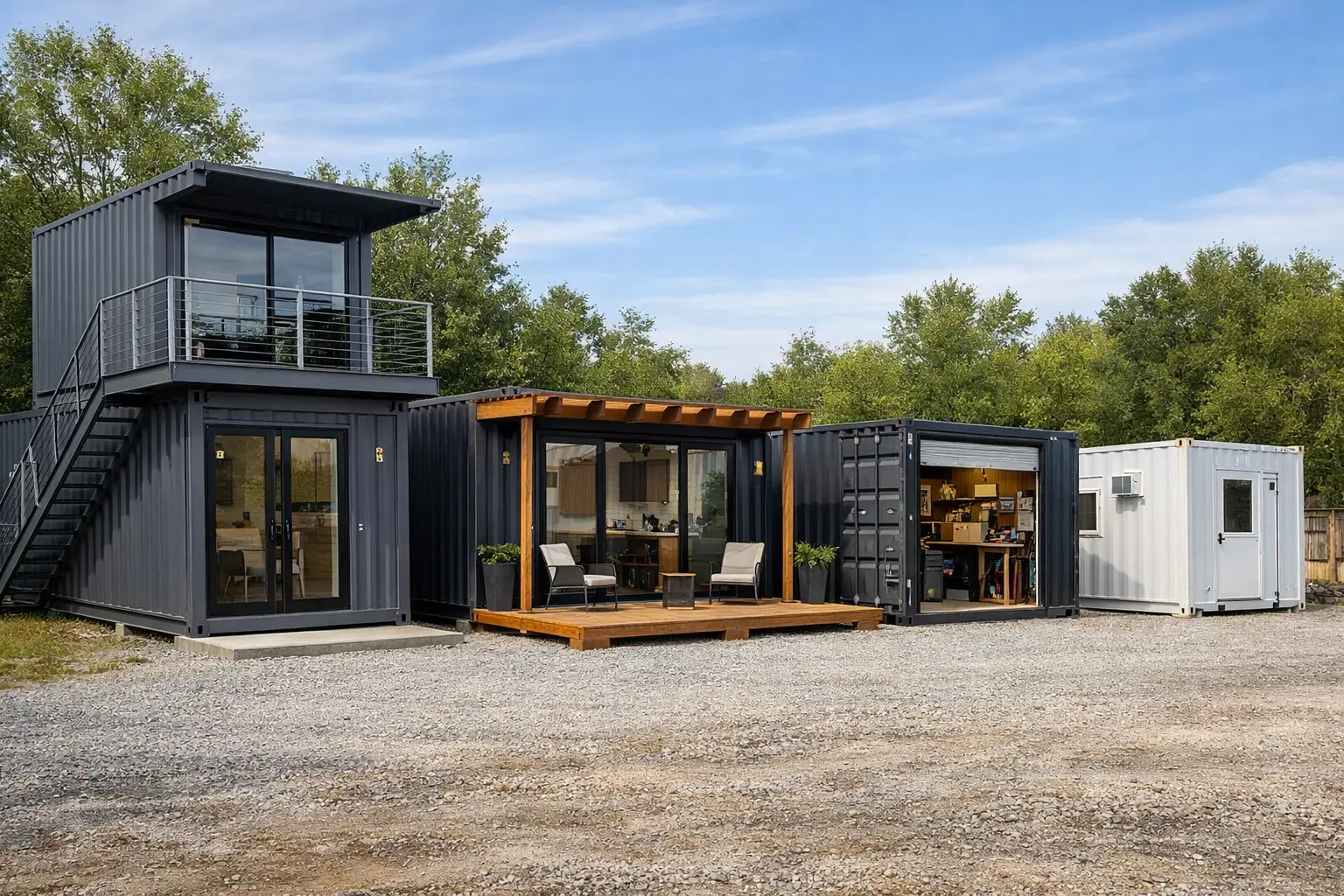
When one container is not enough, multiple units can be arranged to create larger offices, housing layouts, training areas, retail environments, or operational facilities. This approach offers flexibility, but it also increases the importance of layout planning, structural modifications, transport access, and site coordination.
A modular design works best when each container has a clear role. One might serve as the main workspace, another as storage, and a third as a meeting or support area. That approach can be easier to expand over time than trying to force every function into one oversized interior.
Modification Decisions That Affect the Finished Space
The most visible additions are usually windows, doors, paint, and interior finishes. The most consequential decisions are often less obvious: insulation level, ventilation, electrical capacity, floor condition, drainage around the site, and how the unit will be delivered and positioned.
Cutting large openings can improve access and natural light, but it changes how the container needs to be reinforced. Adding a finished interior creates comfort, but it reduces available interior dimensions. A high-cube unit can help recover some of that headroom. Exterior colors also matter in hot climates, where sun exposure can make an uninsulated steel container uncomfortable quickly.
It is also wise to plan for loading and delivery before the build is finalized. Confirm that the selected location has practical truck access and that the doors can open where you need them to. Nationwide delivery makes container ownership accessible across the United States, but a clear delivery plan helps avoid last-minute site issues.
Build Around the Work You Need Done
The strongest container conversion is not the one with the most features. It is the one that makes daily work easier, protects what matters, and leaves room for future changes. Whether you need a basic storage unit, a finished office, a reefer solution, or a multi-container facility, start with the operating need and request a quote based on the modifications that will actually serve it.