
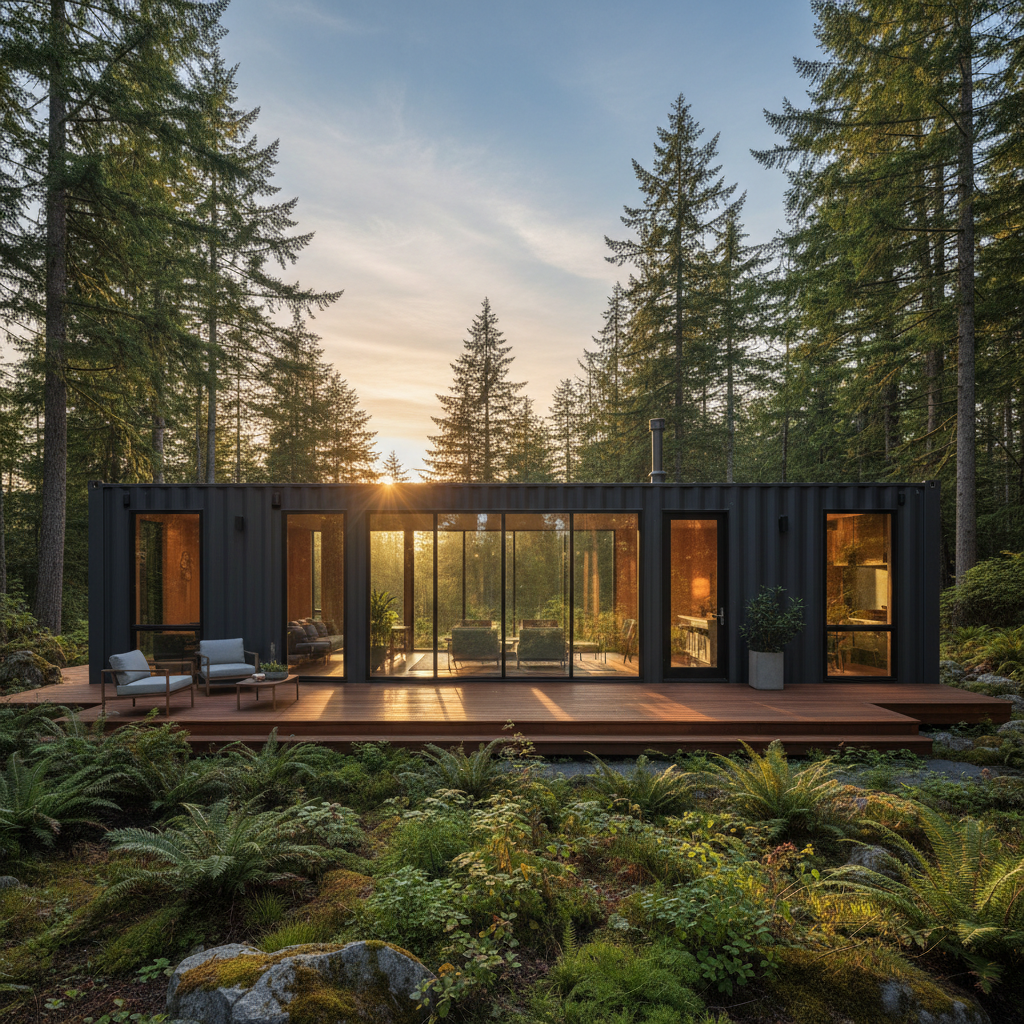
The 2026 housing market is punishing. With traditional stick-built construction costs soaring and interest rates keeping many buyers sidelined, the demand for prefabricated luxury container homes under $100k has reached a fever pitch. But here is the reality: 'luxury' doesn't mean cheap, and 'under $100k' requires a strategic approach to design and fabrication. At Outback Shipping Containers, we see hundreds of buyers trying to balance high-end aesthetics with the hard math of container logistics. Whether you are looking for a guest house, a remote cabin, or a primary residence, the sweet spot for a fully finished, high-spec unit currently sits between $65,000 and $95,000.
Table of Contents
- 1prefabricated luxury container homes under $100k: What Defines a Luxury Container Home Under $100k?
- 2Top Prefabricated Luxury Container House Plans
- 3Modern Shipping Container House Price Drivers in 2026
- 4Financing Your $100k Container Project
- 5Ready-to-Move-In vs. Bespoke Builds
- 6Critical Inspections for 20-Foot and 40-Foot Luxury Modular Shells
- 7High-Efficiency MEP Systems and Smart Integration
- 8Site Preparation and Hidden Soft Costs
- 9Frequently Asked Questions
- 10Explore Related Products & Guides

prefabricated luxury container homes under $100k: What Defines a Luxury Container Home Under $100k?
A luxury build is distinguished from a basic 'storage unit with a window' by its thermal performance, internal finishes, and structural integrity. When shopping for turn-key container homes for sale, you should expect more than just the basics. In the 2026 market, a sub-$100k luxury package typically utilizes a 40ft high cube shipping container to provide the extra foot of vertical clearance necessary for recessed lighting and thick spray-foam insulation.
Luxury amenities in this price bracket usually include floor-to-ceiling glazing (often replacing the original cargo doors), mini-split HVAC systems, custom cabinetry, and high-performance cladding. If you see prices significantly lower than $60,000 for a 'fully finished' unit, proceed with caution. Often, those prices exclude essential items like electrical panels, plumbing manifolds, or the CSC plate certification needed for certain building permits.
| Feature | Economy Build ($30k-$50k) | Luxury Prefab ($70k-$100k) |
|---|---|---|
| Insulation | Fiberglass Batts or EPS Board | Closed-Cell Spray Foam (R-21+) |
| HVAC | Window Unit / Through-wall | Multi-zone Mini-Split (Quiet/Efficient) |
| Windows | Standard Vinyl Sliders | Double-Pane Tempered Glass / Aluminum Frame |
| Countertops | Laminate or Butcher Block | Quartz, Granite, or Polished Concrete |
| Exterior | Original Corrugated Paint | Composite Siding or High-Performance Coating |
Top Prefabricated Luxury Container House Plans
Efficiency is the key to maintaining luxury while staying under the $100,000 threshold. In 2026, we are seeing three dominant layouts that maximize both the cargo container sizes and the buyer's budget.
- **The Luxury Studio (20ft):** Best for ADUs or short-term rentals. These units, like the Custom 20ft Shipping Container Home, focus on premium materials in a 160 sq. ft. footprint.
- **The Signature Single Bedroom (40ft):** The most popular choice for buyers. The 40ft Kennedy Luxury Container Home provides a separate master suite, full kitchen, and living area within 320 sq. ft.
- **The Expandable Villa:** Modular units that can be linked later. While a full 4 Bedroom Luxury Villa might push the budget, starting with a core luxury module keeps you under the $100k mark initially.
Site preparation is the 'silent' cost. Even if your container home costs $85,000, you must budget an additional $10k–$20k for utility hookups, foundation piers, and the crane/tilt-bed delivery fee.
Modern Shipping Container House Price Drivers in 2026
Why do prices vary so much? How much is a shipping container in 2026 depends heavily on whether you start with a new one-trip unit or a used cargo-worthy container. For luxury builds, we almost exclusively recommend one-trip containers. They have fewer dents, no chemical residues from previous ocean freight, and a perfectly square frame—essential for high-end window installations.
Labor is the second major driver. A high-end container home requires specialized trades: certified welders for structural cutouts and HVAC technicians who understand the unique condensation risks of Corten steel. While you can save money by buying a refurbished container, the 'luxury' aspect comes from the fit-out, which is labor-intensive.

Financing Your $100k Container Project
Traditional mortgages can be tricky for container homes unless they are permanently affixed to a foundation and titled as real property. However, in 2026, several shipping container business loan options and personal construction loans have emerged to fill the gap. Many buyers utilize an ADU financing guide to tap into home equity for these builds.
Ready-to-Move-In vs. Bespoke Builds
When you have a hard cap of $100,000, choosing a 'ready-to-move-in' model is safer than a bespoke build. When a bespoke container build makes sense is usually when the budget exceeds $150k. For the sub-$100k range, stick to proven floor plans like the 40ft Augustine Luxury Home, which includes a bathroom, kitchenette, and even garage space in a pre-engineered package.
Critical Inspections for 20-Foot and 40-Foot Luxury Modular Shells
When your budget is capped at $100,000, the integrity of the steel shell dictates the longevity of your investment. High-end prefabricated units often utilize 'One-Trip' containers, which have only moved across the ocean once. Unlike 'CWO' (Cargo Worthy) or 'Wind and Watertight' (WWT) grades, One-Trip units have minimal structural fatigue and negligible interior floor contamination. At this price point, you should expect the fabricator to provide a certified inspection report verifying that the Corten steel hasn't suffered deep-seated corrosion or structural warping during the initial transit.
The fabrication process involves strategic cut-outs for floor-to-ceiling glazing and sliding glass doors—features that define the 'luxury' aesthetic. However, every cut weakens the container's inherent monocoque strength. Professional builders must integrate square tube steel reinforcement around these openings. If a builder suggests that a $90k unit doesn't require extra header beams for a 12-foot span of glass, it is a significant red flag regarding the home's long-term seismic and snow-load performance.
- Exterior Paint: Require a three-part marine grade epoxy primer and polyurethane topcoat to prevent rust.
- Flooring: Verify the removal or encapsulation of the original tropical hardwood plywood which is often treated with pesticides like Methyl Bromide.
- Corner Castings: Ensure the vertical weight is distributed through the original corner posts, even if the unit is set on a concrete slab.
- Roofing: Demand a slight pitch or an auxiliary roof membrane to prevent water pooling on the flat steel surface.
Always ask for the original CSC plate data. This plate is the container's birth certificate and confirms its age and weight-bearing capacity, which is vital for local building permit approval.
High-Efficiency MEP Systems and Smart Integration
To achieve a luxury feel under $100k, the internal Mechanical, Electrical, and Plumbing (MEP) systems must be invisible and efficient. Standard container homes often suffer from noisy HVAC units or visible conduit. A premium $85,000 to $95,000 build should feature a multi-zone mini-split system with a SEER rating of 20 or higher, ensuring the home remains silent and temperature-controlled without the vibration typical of cheaper through-wall units. Because containers are thermal conductors, the integration of smart thermostats is not just a luxury; it is a necessity for managing energy bills in extreme climates.
Plumbing in a 320-square-foot luxury unit requires creative engineering. High-end builders utilize 'wet walls' where all plumbing is consolidated into a single insulated interior partition. This prevents the need to pierce the exterior steel skin multiple times, which is the primary cause of thermal bridging and moisture ingress. Furthermore, luxury builds at this tier often include tankless electric water heaters and PEX-B piping for durability and ease of maintenance in tight wall cavities.
| Component | Entry-Level Spec | Luxury Under $100k Spec |
|---|---|---|
| HVAC | Window Unit / Through-Wall | Ducted Mini-Split / 22 SEER |
| Lighting | Standard Surface Mount | Integrated Smart LED Recessed |
| Insulation | Fiberglass Batts | Closed-Cell Spray Foam (R-21+) |
| Glazing | Single Pane Aluminum | Low-E Argon Double Pane Vinyl/Steel |
The Role of Closed-Cell Spray Foam
The single most important technical detail in a $100k container home is the use of closed-cell spray foam insulation. Unlike fiberglass or mineral wool, closed-cell foam acts as a vapor barrier that is applied directly to the interior steel ribs. This prevents the 'soda can effect' where warm interior air hits the cold steel shell, leading to condensation, mold, and eventual rust behind your expensive finishes. A luxury build will typically feature 2-3 inches of foam on the walls and 4 inches on the ceiling, creating an airtight envelope that outperforms traditional stick-built housing.
Ask your builder for a 'blower door test' result. A true luxury prefab should have a low ACH (Air Changes per Hour) rating, proving that the insulation and window seals are high-performing.
Site Preparation and Hidden Soft Costs
Buyers often focus on the $85,000 price tag of the unit itself while ignoring the $15,000 to $20,000 required for site infrastructure. To keep your total project under $100k, you must navigate the foundation and utility hookups strategically. Helical piles are often the most cost-effective foundation for container homes, as they require no massive concrete pours and can be installed in a single day. This method also preserves the 'portable' nature of the luxury asset, which can be beneficial for certain zoning classifications or if you ever decide to relocate the structure.
Permitting and impact fees vary wildly by jurisdiction. In many rural areas, a container home is treated as an ADU (Accessory Dwelling Unit), which may have lower fee structures than a primary residence. However, in urban coastal zones, seismic engineering and solar mandates can add $10,000 to your budget instantly. Before signing a contract for a $90,000 prefab unit, ensure you have a 'soft cost' contingency that covers your crane rental—which can cost between $2,000 and $5,000 depending on the reach required to set the unit on your foundation.
- 1Geotechnical Survey: Determine soil bearing capacity before choosing a foundation.
- 2Utility Trenching: Run electrical, water, and sewer lines to the exact footprint of the container intake.
- 3Crane Logistics: Ensure there is a 20x40 foot clear 'swing zone' free of power lines and trees.
- 4Final Stitching: If using multiple containers, budget for the on-site welding and weatherproofing of the seams.
If your site is remote, look for builders who offer 'turn-key' off-grid packages including solar arrays and composting toilets, as extending municipal grid lines can cost upwards of $50 per linear foot.
Frequently Asked Questions
We've compiled the most common questions from buyers looking into the luxury prefab market this year.