
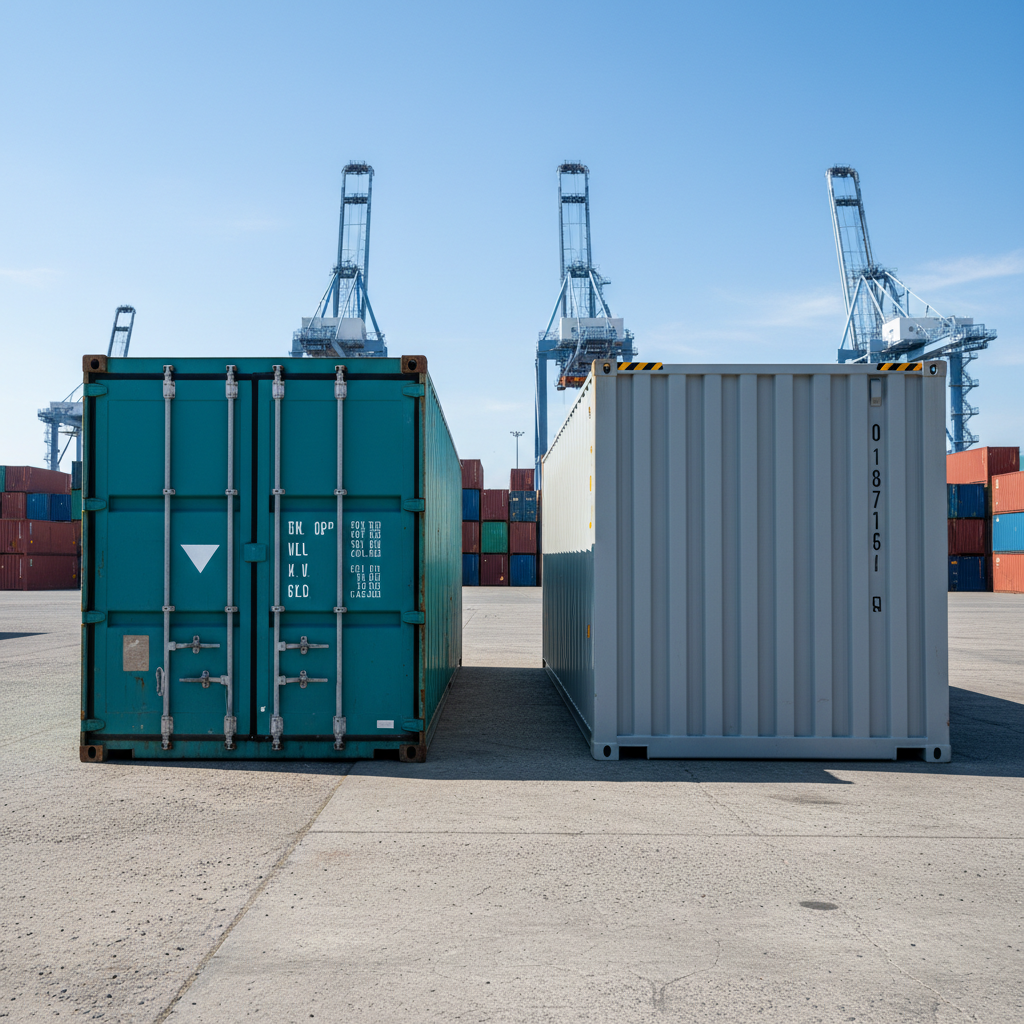
cargo-worthy vs one-trip shipping container cost — If you are standing on the edge of a $3,000 to $6,000 investment, the choice usually narrows down to two industry standards: Cargo Worthy (CWO) and One-Trip. While the aesthetic gap is obvious, the cargo worthy vs one trip shipping container cost difference reflects more than just a fresh coat of paint. In 2026, the price spread between these two grades has widened due to shifts in global steel production and North American depot inventories. Understanding where that extra $1,200 to $2,000 goes—and whether it provides a tangible return for your specific project—is the difference between a smart asset purchase and a maintenance nightmare.
Table of Contents
- 1cargo-worthy vs one-trip shipping container cost: Defining the Grades: CWO vs. One-Trip
- 22026 Cargo Worthy vs One-Trip Shipping Container Cost Analysis
- 3Structural Integrity and Resale Value
- 4Detailed Breakdown of Lifecycle and Environmental Impacts
- 5Site Preparation and Hidden Delivery Expenses
- 6Financial Depreciation and Long-Term ROI
- 7Frequently Asked Questions
- 8Conclusion: Which Should You Choose?

cargo-worthy vs one-trip shipping container cost: Defining the Grades: CWO vs. One-Trip

To evaluate the cost, we must first define what you're paying for. A 'One-Trip' container is the closest you can get to 'new' in the United States. These units are manufactured in Asia, loaded with a single cargo load to offset transport costs, and then sold upon arrival. Conversely, a used 40ft cargo container in Cargo Worthy condition has spent 10–15 years in international service. It likely features surface rust, dings, and 'patch' repairs, but it has been inspected and certified by a maritime surveyor to be structurally sound for sea travel under ISO 668 standards.
The CWO Standard
Cargo Worthy (CWO) means the unit meets the criteria to be re-certified for international shipping. It is a step above 'Wind and Watertight' (WWT) because it requires the floor, corner castings, and structural rails to meet stricter tolerances. If you are looking to buy used cargo worthy containers, you are buying a unit that can handle the stress of being stacked nine-high on a vessel.
| Feature | Cargo Worthy (Used) | One-Trip (New) |
|---|---|---|
| Typical Age | 10–15 Years | < 1 Year |
| Est. Price (20ft) | $1,900 – $2,400 | $3,200 – $4,100 |
| Est. Price (40ft HC) | $2,600 – $3,400 | $4,800 – $5,900 |
| Appearance | Rust, dents, floor stains | Pristine, minimal scuffs |
| Life Expectancy | 15–20 Years (Static) | 40–50 Years (Static) |
| Modification Ease | Moderate (needs prep) | Excellent (clean steel) |
2026 Cargo Worthy vs One-Trip Shipping Container Cost Analysis
Pricing in 2026 is influenced by the 'depot-to-delivery' ratio. Currently, CWO shipping container pricing for a standard 20ft unit averages $2,200, while a 40ft used shipping container ranges from $2,800 to $3,200 depending on the proximity to a major port like Houston or Long Beach. In contrast, one trip container value 2026 remains high because these units serve as 'investment grade' assets.
When comparing costs, you aren't just looking at the sticker price; you're looking at the total cost of ownership (TCO). A One-Trip unit usually features high-locking handles and a factory-installed lock box, which are $150–$250 additions on used units. Furthermore, the marine-grade plywood floors in One-Trip units are pristine, whereas CWO floors may have oil stains or chemical odors from previous freight. For more on general pricing trends, see our 2026 shipping container grade price comparison.
If you are storing moisture-sensitive items like documents, high-end furniture, or electronics, the $1,500 premium for a One-Trip container is insurance against the 'old steel' smell and potential floor off-gassing found in older CWO units.
Structural Integrity and Resale Value
One of the biggest misconceptions in shipping container condition ratings is that 'used' means 'weak.' A CWO container is made of Corten steel (a weathering steel alloy) just like a new one. However, the shipping container resale value of a One-Trip unit remains significantly higher. If you plan to use the container for five years and then sell it, a One-Trip unit may retain 80% of its value, while a CWO unit might only retain 50-60% as it transitions into 'As Is' condition.
For those pursuing modifications, the 'clean' steel of a One-Trip unit is far easier to weld and paint. If you are building a luxury 2 bedroom shipping container home, starting with a New/One-Trip unit is almost mandatory to meet stringent state permit requirements.
IICL vs. Cargo Worthy Standards
Occasionally, you will see 'IICL' mentioned. This is a higher used grade than CWO. IICL (Institute of International Container Lessors) standards are even stricter regarding dents and floor repairs. While IICL units cost more than CWO, they still don't match the cosmetic perfection of a One-Trip unit. If you're debating between used grades, one trip vs WWT containers is often the more relevant comparison for basic farm or job-site storage.
Detailed Breakdown of Lifecycle and Environmental Impacts
When assessing the cargo-worthy vs one-trip shipping container cost, most buyers overlook the 'remaining useful life' metric. A one-trip container is manufactured in Asia, loaded once, and discharged at a US port, effectively entering the domestic market as a new unit. These units typically offer a 25 to 30-year lifespan when used for stationary storage. Conversely, a cargo-worthy (CWO) unit has spent 10 to 15 years in the harsh marine environment, enduring high-salinity air, heavy stacking pressure, and constant movement. While the upfront cost of a CWO unit is lower, you are essentially purchasing the back half of its functional life.
The environmental footprint also varies significantly between these two tiers. One-trip containers represent a higher initial carbon expenditure due to the production of new Corten steel. However, for those planning long-term modular builds or permanent storage, the one-trip unit requires fewer chemical treatments and less frequent repainting, which reduces long-term toxic runoff. CWO units are the ultimate form of recycling, preventing 4,000 to 8,000 pounds of steel from being scrapped. Buyers must weigh the 'green' benefit of repurposing an old unit against the maintenance costs required to prevent oxidation and scale.
- One-Trip: Minimal surface rust, pristine factory paint, and functioning door seals.
- Cargo-Worthy: Valid CSC plate for international shipping but likely features patches or 'dings'.
- Environmental Impact: CWO units prevent industrial waste; One-trips offer longevity.
- Maintenance: CWO units require inspection every 2-3 years for rust progression.
If you are purchasing a container for a municipal project or a permitted building, one-trip units are often required by local building codes to ensure structural baseline compliance without expensive engineer certifications.
Site Preparation and Hidden Delivery Expenses
The price gap between cargo-worthy and one-trip units is often narrowed by the preparation work required for each. Because one-trip containers are structurally perfect, they sit evenly on simple concrete blocks or a level gravel pad. Cargo-worthy units, due to their years of service, may have slight floorboard warping or 'racked' frames—meaning the container is slightly out of square. This requires more precise leveling during delivery to ensure the doors operate smoothly. If the doors on a CWO unit bind, you may need to invest in heavy-duty shims or site remediation that eats into your initial savings.
Delivery logistics remain consistent across both grades, but the risk of 'refusal' is higher with CWO units. When a CWO container arrives, it is essential to inspect the floor for chemical spills that occurred during its 15-year tenure at sea. While a CWO grade guarantees the unit is wind and water-tight, it does not guarantee it is odor-free. One-trip units are virtually guaranteed to be clean, making them the superior choice for document storage, textile housing, or conversion into living spaces where indoor air quality is a priority.
| Feature | Cargo-Worthy (CWO) | One-Trip (New) |
|---|---|---|
| Floor Condition | Scratched, possible oil stains | Pristine marine-grade plywood |
| Door Operation | May require grease/leverage | Smooth, easy-open handles |
| Aesthetic | High-vis color, many decals | Solid neutral colors (Tan/Grey) |
| Modifiability | Harder to weld due to rust | Excellent for precise cuts |
Never buy a CWO unit 'sight unseen' if you plan to store moisture-sensitive items. Always request photos of the interior floor and the door gaskets to ensure the seal hasn't dry-rotted.
Financial Depreciation and Long-Term ROI
Analyzing the cargo-worthy vs one-trip shipping container cost through a five-year depreciation lens reveals a surprising trend. One-trip containers hold approximately 80-90% of their value in the secondary market. Because they remain aesthetically pleasing, they are highly sought after for residential backyard storage. If you buy a one-trip unit for $4,500 today, you can likely sell it for $3,800 in five years. The liquidity of one-trip units is a major advantage for business owners who may need to liquidate assets quickly.
Cargo-worthy units have a much lower price floor but also a lower ceiling. A CWO unit purchased for $2,500 may only resale for $1,800 in the same timeframe, and the pool of buyers is smaller. Most private buyers are wary of older units with visible rust or heavy patching. However, for industrial sites, construction zones, or farms where the container will be beaten up anyway, the CWO unit offers the best return on investment. You aren't paying a premium for paint that will inevitably be scratched by heavy machinery or site equipment.
- 1Assess your timeline: Under 5 years? CWO is fine. Over 10 years? Buy One-Trip.
- 2Determine the 'Visibility Factor': Will neighbors or customers see the unit?
- 3Check local zoning: Some HOAs ban CWO units but allow One-Trips if painted.
- 4Calculate total cost: Add $500 to CWO for potential painting and floor sealing.
If you choose a CWO unit, spend $150 on a high-quality DTM (Direct To Metal) paint. A single coat can extend the life of a cargo-worthy container by another 5-7 years by preventing pinhole rust from becoming structural.
Frequently Asked Questions
Buyers often struggle with the final decision. Here are the most common questions our team hears at the depot.
Conclusion: Which Should You Choose?
The choice between cargo worthy and one-trip comes down to your 'horizon of use.' If you need a permanent, visible structure—like a backyard office or a retail pop-up—the One-Trip container's aesthetics and longevity justify the cost. However, if you are a contractor needing secure, onsite tool storage or an agricultural buyer needing a dry space for equipment, the Cargo Worthy grade provides the best utility-to-dollar ratio.
If you're ready to compare inventory for your project, our team can pull matching units from our nationwide depots to ensure you get the best possible rate. Whether you need a 40ft New High Cube or a fleet of used units, we provide transparent photo-inspections before delivery.