
Table of Contents
A used container can be a smart, long-lasting answer to a crowded job site, exposed farm equipment, seasonal inventory, or a property project that needs secure space fast. But knowing how to buy used shipping containers means looking beyond the listing photo. The right unit depends on what you will store, where it will sit, how it will be delivered, and how much cosmetic wear you can accept.
Used containers have earned their marks in ocean and rail service. Dents, surface rust, faded paint, patches, and old shipping labels are normal. Those details may not matter for construction materials or tools, but they matter more if you are building an office, workshop, pool enclosure, or another finished conversion. Start with the job, then buy the container that fits it.
Start With the Job the Container Must Do
Before selecting a size or condition, define the container's daily purpose. A contractor storing hand tools and consumables has different needs than a farmer protecting feed, a retailer holding overflow inventory, or a homeowner planning a backyard workshop.
For straightforward storage, focus on usable floor space, door access, and the condition of the floor, roof, seals, and locking gear. If you plan to modify the unit later, consider the layout early. Adding personnel doors, windows, insulation, electrical work, or climate control can affect where you want openings and how much interior height you need.
A container intended for transport may need to meet requirements that do not apply to stationary storage. Be clear with the seller about whether the unit will remain on your property, move between job sites, or enter cargo service. This keeps the conversation focused on the right equipment rather than the lowest initial quote.
Choose the Right Used Container Size
For many buyers, the practical choice comes down to 20-foot versus 40-foot length. A 20-foot container is easier to place on tighter properties and provides substantial storage for tools, equipment, materials, or household items. Its shorter footprint can make it a sensible choice for residential lots, small businesses, and compact job sites.
A 40-foot container offers roughly twice the length and is often the better fit for larger inventory, long materials, agricultural equipment, or multi-use storage. It can also provide more flexibility for a conversion, such as separating storage from workspace. The trade-off is that a longer container requires more room for placement and delivery access.
High-cube containers add extra interior height compared with standard-height units. That additional headroom can be useful for bulky equipment, shelving, taller doors, insulation, or a finished interior. If vertical space matters, ask whether a used high-cube unit is available rather than trying to force a standard container to do a high-cube job.
Ten-foot containers can work well when space is limited and storage needs are modest. They are useful for tools, supplies, and smaller property projects, but they may feel restrictive if you expect your storage needs to grow. Buying too small is one of the most common reasons buyers end up needing a second container sooner than planned.
Understand Used Container Condition
Used shipping containers are typically sold based on their overall condition, age, repair history, and intended use. A lower-cost unit may show more visible wear, while a cleaner used container may be a better match for customer-facing locations or projects where appearance matters.
Ask direct questions about the specific unit or available inventory. You want to understand the condition of the roof, side panels, corner castings, cargo doors, gaskets, locking bars, flooring, and any prior repairs. Surface corrosion can be expected on a working container. More significant corrosion, damaged structural areas, or a compromised roof deserves closer attention, especially if the container will protect valuable inventory. buy used shipping containers
The container floor also deserves a careful look. Check for soft spots, cracks, stains, damage around the threshold, and signs of prior cargo residue. If you plan to store food-related goods, sensitive equipment, or products that require a clean environment, explain that upfront. A standard used cargo container may not be the right starting point for every storage application.
Do not assume a used container will look uniform from one side to the other. Containers are working equipment, and condition can vary by individual unit. Request current photos or an inspection opportunity when practical, and make sure the seller's description matches the container being offered. buy used shipping containers
Inspect Doors, Roof, and Floor Before You Commit
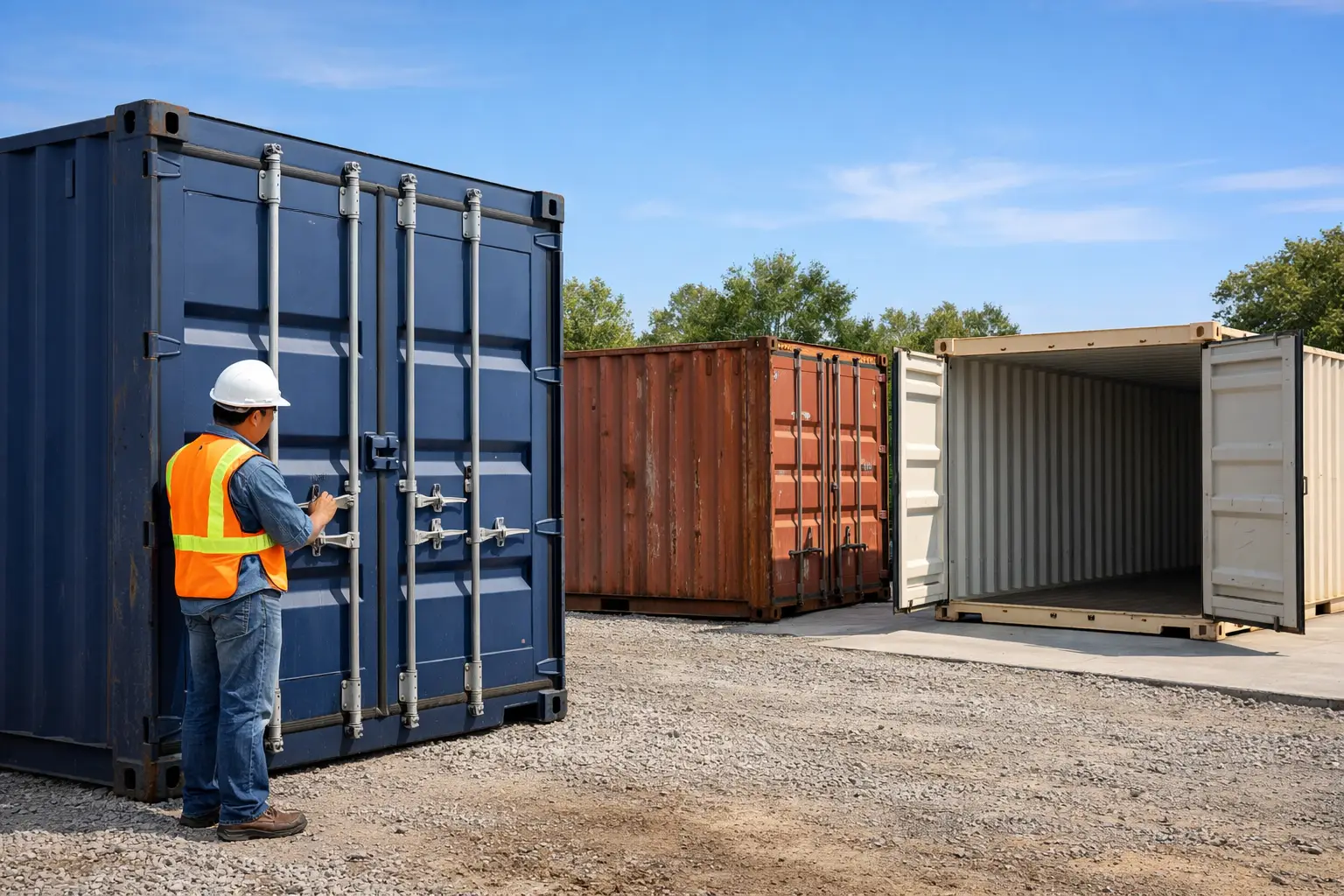
A container's doors are used constantly, so they should be easy to operate and secure when closed. Open and close both doors if you are inspecting in person. Look at the hinges, locking bars, handles, cams, retainers, and rubber gaskets. Doors that are difficult to move may need adjustment or repair, which should be part of your buying decision. buy used shipping containers
Inside the container, close the doors and look for visible daylight around seams, door edges, and the roof. Bring a flashlight and inspect the ceiling rails, upper corners, and floor line. Check the roof from the outside for dents, patches, or areas where water could collect. A few cosmetic dents are common, but the roof is not a place to ignore damage. buy used shipping containers
If you cannot inspect the container yourself, ask for detailed, current images of the exterior, interior, roof area, floor, doors, and identifying markings. A reputable supplier should be able to explain what you are buying and help match available units to your intended use. buy used shipping containers
Plan the Delivery Site Before Ordering
Buying the container is only part of the project. Delivery access can determine which size and unloading method will work at your location. Measure the approach route, including gates, turns, driveways, overhead branches, utility lines, parked vehicles, and soft ground. A 40-foot container requires a longer, clearer approach than a 20-foot unit. buy used shipping containers
Choose a level, stable placement area that can support the loaded container and allow water to drain away. Many buyers use compacted gravel, concrete pads, or other prepared supports appropriate to their property and intended use. The container needs support at its corner castings and should not be placed where one end can settle unevenly.
Think about door orientation before delivery. Once a container is set, changing its direction is not a simple task. Decide whether you need doors facing the driveway for frequent loading, toward a protected work area, or away from public view. Leave enough room in front of the doors to open them fully and move equipment safely. buy used shipping containers
Nationwide delivery can simplify the purchase, but clear site information is still essential. Share photos, measurements, access limitations, and the planned placement location early. That gives the delivery team the details needed to coordinate the right approach. buy used shipping containers
Compare Quotes on More Than the Container Price
A used container quote should make it clear what is included. Ask whether the quoted unit is a specific container or a condition category, how delivery is handled, and whether any requested modifications are included. If you need lockboxes, vents, shelving, doors, windows, paint, electrical preparation, or insulation, have those requirements documented before the order is finalized.
The lowest quote is not always the lowest total cost. A container that does not fit the site, lacks the condition needed for the job, or requires immediate repairs can create extra work after delivery. Compare the equipment, service scope, delivery plan, and seller communication together. buy used shipping containers
For larger purchases or custom projects, financing may help spread out the investment. Review available options with the supplier, but select a payment approach that fits your project budget and operating needs. buy used shipping containers
Know When a Reefer or Custom Conversion Makes More Sense
A standard used dry container is designed for general cargo and storage. It is a strong fit for equipment, construction supplies, tools, inventory, and many agricultural uses. It is not automatically suited for products that must stay within a controlled temperature range. buy used shipping containers
For temperature-sensitive storage, refrigerated reefer containers are the purpose-built option. They require planning for power, operating conditions, and the amount of interior space taken up by refrigeration equipment. Discuss the temperature range and product requirements before selecting a reefer unit. buy used shipping containers
If your goal is a container office, welfare unit, workshop, home, or pool project, buying an unmodified used container may still be the right first step. However, a professionally planned conversion can save time and avoid piecemeal changes later. Share how the finished space will be used, who will use it, and what features need to be included from the start. buy used shipping containers
Ask These Questions Before You Place an Order
A productive conversation with a container supplier starts with clear information. Be ready to explain your use case, preferred size, delivery city, site access, desired door orientation, and whether the container needs to remain basic or support a future conversion.
Also ask about the container's general condition, current photos, available sizes, delivery process, and any custom work you are considering. If appearance matters, say so. If the unit will store high-value equipment, say so. Specific requirements give the supplier a better chance to recommend the right used container rather than a one-size-fits-all option. buy used shipping containers
Outback Shipping Containers can help buyers source used containers, new units, reefers, and custom-built solutions with nationwide delivery coordination. The best purchase is the one that arrives ready for the work you actually need it to do - secure, practical, and sized for what comes next. buy used shipping containers