
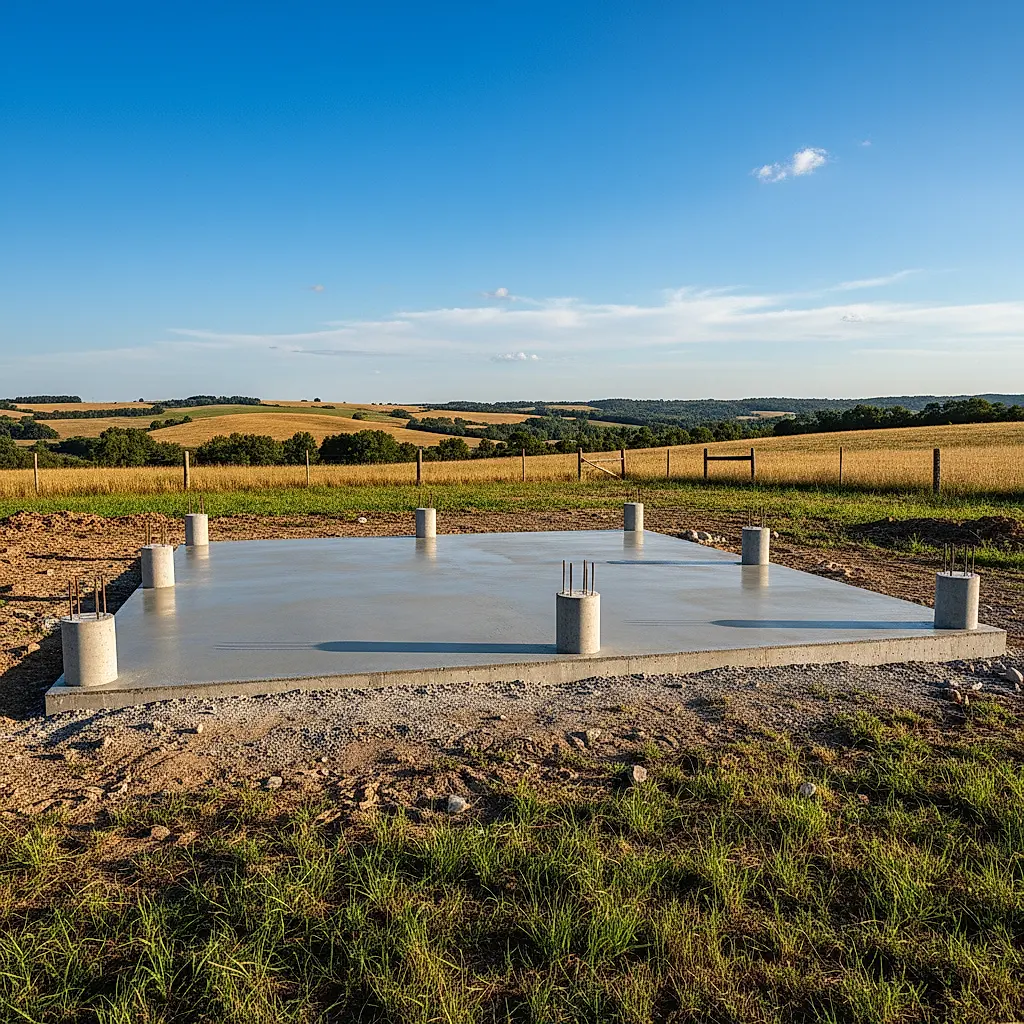
shipping-container-foundation-cost-per-square-foot — Budgeting for a new or pier foundation for shipping containers often stops at the purchase price, but the longevity of your structure depends entirely on what’s beneath it. In 2026, we are seeing a shipping container foundation cost per square foot ranging from $5.00 for simple gravel pads to over $18.00 for engineered concrete slabs. Because ISO containers are designed to bear their entire weight on the four corner castings, choosing the right support system isn't just about cost; it's about preventing the steel frame from twisting, which leads to doors that won't open and compromised structural integrity.
Table of Contents
- 1shipping-container-foundation-cost-per-square-foot: Breaking Down Shipping Container Foundation Cost per Square Foot
- 2Analyzing Concrete Slab Foundation Cost
- 3Pier Foundation for Shipping Containers: The Precision Choice
- 4Factors Influencing Leveling a Shipping Container Cost
- 5Advanced Options: Helical Pile Foundation Pricing
- 6Sub-Grade Preparation and Soil Engineering Impacts
- 7Regional Labor Rates and Material Volatility in 2026
- 8Long-Term Cost Mitigation: Insulation and Anchoring Systems
- 9Frequently Asked Questions
- 10Ready to Prepare Your Site?
- 11Explore Related Products & Guides
shipping-container-foundation-cost-per-square-foot: Breaking Down Shipping Container Foundation Cost per Square Foot

When calculating your shipping container site preparation budget, you must distinguish between the container's footprint and the total work area. A standard 20ft container covers 160 square feet, while a 40ft unit covers 320 square feet. However, labor and material costs fluctuate based on your local AHJ (Authority Having Jurisdiction) requirements and soil stability. Below is a breakdown of the most common conex box foundation types currently used in US residential and commercial projects.
| Foundation Type | Cost per Sq Ft (Est.) | Best For | Durability |
|---|---|---|---|
| Gravel Pad | $5.00 - $8.00 | Dry storage, temporary use | Moderate |
| Concrete Piers | $7.00 - $12.00 | Off-grid homes, sloped land | High |
| Concrete Slab | $12.00 - $18.50 | Workshops, high-traffic offices | Maximum |
| Helical Piles | $15.00 - $22.00 | Wet soil, eco-sensitive areas | Extreme |
Analyzing Concrete Slab Foundation Cost
A full monolithic slab is the gold standard for projects like a luxury container home. The average concrete slab foundation cost for a 40ft unit typically totals between $3,800 and $6,000 depending on thickness (usually 4 to 6 inches) and rebar reinforcement. While this is the most expensive upfront option, it provides a finished floor for workshops and prevents pests or moisture from accumulating under the unit.
Never place a container directly on bare dirt. Even the highest grade Corten steel will eventually suffer from 'bottom-up' corrosion if the bottom cross members are in constant contact with moist soil. This also voids most delivery warranties if the truck gets stuck during offloading.
Pier Foundation for Shipping Containers: The Precision Choice
If you are looking to minimize your shipping container foundation cost per square foot, a pier foundation is often the sweet spot. Instead of pouring a full slab, you pour concrete footings only where the corner castings sit. For a leveling a shipping container cost, you typically need six piers (four corners and two at the mid-point) to prevent sagging. This method is ideal for plumbing access in container offices and helps with leveling a shipping container cost by allowing for insulated skirting.

Factors Influencing Leveling a Shipping Container Cost
Site preparation involves more than just the foundation itself. The total leveling a shipping container cost includes clearing brush, grading the land for drainage, and potentially bringing in fill dirt or crusher run. If your site has a slope greater than 2%, expect your shipping container ground preparation prices to increase by 20-30% due to the additional excavation required to create a level pad.
- Excavation and Clearing: $1.50 - $3.00 per sq ft
- Weed Barrier and Geotextile Fabric: $0.50 per sq ft
- Compacted Gravel (6 inches): $3.00 - $5.00 per sq ft
- Helical Pile Foundation Pricing: $1,200 - $2,500 per pile (installed)
Gravel Pad Cost vs Concrete Slab
A gravel pad is the cheapest foundation for a storage container, but it requires maintenance. Over time, gravel can settle unevenly. For heavy-duty applications like cold storage reefer containers, we strongly recommend concrete or helical piles to support the added weight of the refrigeration motor and dense cargo loads.
Advanced Options: Helical Pile Foundation Pricing
For those building in areas with high water tables or strictly enforced environmental codes, helical piles are becoming the standard. While the helical pile foundation pricing is higher—often reaching $18-$22 per square foot when averaged across the footprint—they require zero excavation and can be installed in a single day. This is particularly useful for leveling a shipping container cost where soil weight and water pressure are major variables.
Expert Tip: The 1/8-Inch Rule
Containers are rigid, but they aren't invincible. If your foundation is off by even 1/4 inch across a 40-foot span, you may find the double doors become impossible to latch. Always verify levelness with a transit level or laser, not just a standard carpenter's level.
Sub-Grade Preparation and Soil Engineering Impacts
The shipping-container-foundation-cost-per-square-foot is rarely determined by the concrete alone; rather, the underlying soil composition dictates the total investment. For instance, expansive clay soils in regions like Texas or the Southeast require deeper excavation and more robust structural reinforcement than the sandy, well-draining soils of the Southwest. If your site analysis reveals high plasticity index (PI) soil, you must budget for an additional 2 to 4 feet of select fill to prevent seasonal shifting that can twist a container's steel frame.
Proper site grading accounts for roughly 15% to 20% of the total foundation expense. A site that requires significant 'cut and fill' to create a level pad will see costs rise by $2,500 to $5,000 before the first yard of concrete is poured. Failure to manage water runoff leads to hydrostatic pressure against the foundation, which can cause the container doors to jam due to micro-shifts in the structure's levelness. Professional grading ensures that water moves away from the load-bearing points at a minimum 2% slope.
- Geotechnical Soil Report: $800 – $2,500 (Crucial for multi-story builds)
- Site Clearing and Grubbing: $1.50 – $3.00 per square foot
- Imported Select Fill: $35 – $55 per cubic yard delivered
- Compaction Testing: $300 – $600 per visit
Never place a container directly on raw topsoil. The organic matter will decompose, leading to uneven settling that can breach the container's structural integrity and void warranties on modified units.
Regional Labor Rates and Material Volatility in 2026
Labor remains the most volatile variable in the shipping-container-foundation-cost-per-square-foot equation. In high-demand metropolitan areas, concrete finishers may command $60 to $90 per hour, whereas rural labor markets might see rates closer to $35. Furthermore, the distance from the nearest batch plant significantly influences the cost. Ready-mix providers typically charge a 'short load' fee for deliveries under 6 cubic yards and a distance surcharge for sites more than 20 miles away, which can add $150 to $300 per truckload.
Material costs for 2026 show a stabilization in rebar pricing, but portland cement remains susceptible to energy-related price hikes. When calculating your square foot cost, you must factor in the PSI (pounds per square inch) requirement. While a standard 3,000 PSI mix suffices for footings, a 4,000 PSI mix with fiber reinforcement is recommended for slabs supporting heavy industrial equipment or multi-container stacks. This upgrade typically adds $10 to $15 per cubic yard but significantly reduces the risk of surface spalling and cracking over the 50-year lifespan of the foundation.
| Region | Avg. Cost/Sq Ft (Slab) | Avg. Cost/Pier (Concrete) | Permit Estimates |
|---|---|---|---|
| Pacific Northwest | $14.50 - $19.00 | $650 - $900 | $1,200+ |
| Midwest | $9.00 - $12.50 | $400 - $600 | $500 - $800 |
| Northeast | $15.00 - $22.00 | $750 - $1,100 | $1,500+ |
| Southeast | $8.50 - $13.00 | $350 - $550 | $400 - $900 |
Bundle your concrete pour with a neighbor or another project on your property to meet minimum yardage requirements and waive 'short load' fees.
Long-Term Cost Mitigation: Insulation and Anchoring Systems
A common mistake in container foundation planning is neglecting the thermal bridge between the steel chassis and the concrete foundation. In cold climates, a slab-on-grade foundation should include 2-inch rigid foam board (EPS or XPS) underneath and along the perimeter. This prevents the shipping-container-foundation-cost-per-square-foot from ballooning later due to high HVAC bills. Adding sub-slab insulation typically adds $2.00 to $3.50 per square foot but pays for itself within three to five years through energy savings.
Anchoring is another critical technical detail. Containers are designed to be secured at the four corner castings. Standard wedge anchors or J-bolts embedded in the concrete are the most common methods, costing roughly $50 per corner. However, in high-wind zones (ASCE 7-22 Risk Category II), you may require heavy-duty weld plates embedded directly into the wet concrete. These plates allow the container to be welded to the foundation, providing superior lateral force resistance during hurricanes or seismic events. While this adds to the initial complexity, it is often a non-negotiable requirement for passing local building inspections.
- 1Install Vapor Barrier: Prevents moisture from rising through the slab and rusting the container floor.
- 2Set Weld Plates: Align perfectly with ISO corner dimensions (usually 7' 8.5" center-to-center).
- 3Pour Concrete: Ensure a smooth finish for slabs or a perfectly level top for piers.
- 4Curing Period: Wait at least 7 to 14 days before placing the 5,000+ lb container.
- 5Final Leveling: Use steel shims to correct any minor variations before welding.
Using a vapor barrier with a minimum 15-mil thickness is highly recommended to protect the container's marine-grade plywood flooring from rot and mold.
Frequently Asked Questions
Below are common questions regarding site preparation and foundation budgeting for conex boxes.
Ready to Prepare Your Site?
Selecting the right foundation is the first step in ensuring your container project lasts for decades. Whether you are setting up a simple 20ft storage unit or a multi-unit luxury modular villa, understanding your shipping container foundation cost per square foot helps prevent expensive mid-project corrections. If you're ready to compare inventory for your project, our team can pull matching units from our nationwide depots and provide the exact weights and dimensions your engineer will need for foundation planning.