
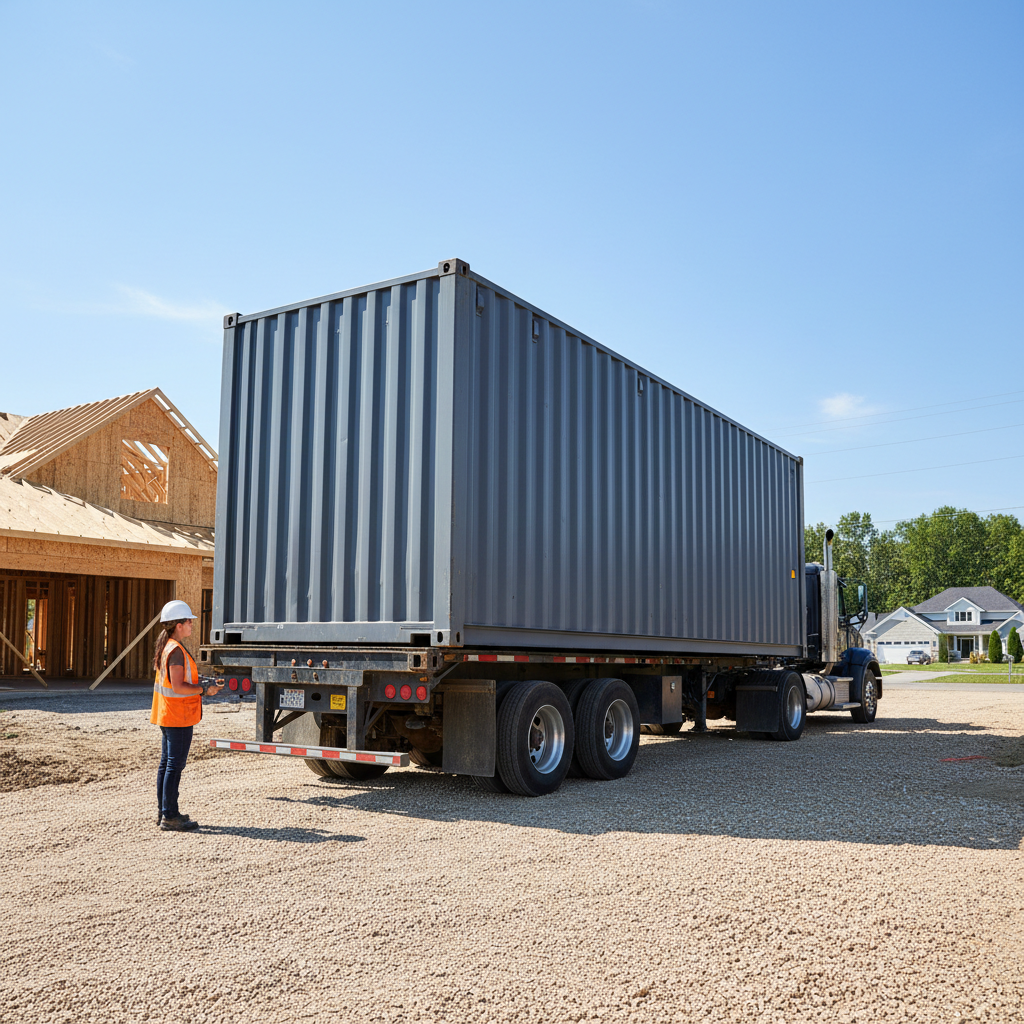
For many small businesses and homeowners in July 2026, the need for secure storage is immediate, but tying up $4,000 to $6,000 in liquid capital isn't always feasible. Searching for rent to own shipping containers near me has become the go-to strategy for those looking to preserve cash flow while securing an asset. Unlike traditional bank financing, these programs rely on the container itself as collateral, allowing for flexible terms that transform a large capital expenditure into a manageable operating expense.
Table of Contents
- 1How Rent to Own Shipping Containers Near Me Programs Work
- 2Current 2026 Monthly Payment Shipping Containers Pricing
- 3Choosing the Right Unit for Your Payment Plan
- 4Delivery Considerations for Local Rent to Own Units
- 5Is Rent-to-Own Right for You?
- 6Critical Contract Terms You Must Verify Before Signing
- 7Site Preparation and Municipal Zoning Requirements
- 8Inspecting Quality: Used (Cargo Worthy) vs. One-Trip Units
- 9Frequently Asked Questions
- 10Explore Related Products & Guides

How Rent to Own Shipping Containers Near Me Programs Work
The mechanics of shipping container rent-to-own programs are straightforward: you enter a lease agreement where a portion of your monthly payment goes toward the eventual ownership of the unit. At the end of the term—typically 12, 24, 36, or 48 months—you own the container outright. This is fundamentally different from a standard rental, where you pay indefinitely and never gain equity.
One of the biggest draws is the availability of no credit check shipping container financing. Because the container can be recovered if payments lapse, many providers skip the hard credit pull, making this an ideal path for new businesses or individuals rebuilding their credit. You typically only need a down payment covering the first month's rent and a delivery fee to get started.
| Feature | Rent-to-Own (RTO) | Traditional Financing | Straight Cash Purchase |
|---|---|---|---|
| Credit Check | Often None Required | Hard Credit Pull | None |
| Upfront Cost | Low (Delivery + 1st Month) | Varies (Often 10-20%) | Full Purchase Price |
| Ownership | After Final Payment | Immediate (with Lien) | Immediate |
| Flexibility | Can Return Unit Early | Rigid Loan Terms | Asset Liquidily Only |
Current 2026 Monthly Payment Shipping Containers Pricing
In the current market, prices for buy containers with monthly payments fluctuate based on depot location and inventory levels. For example, a 20ft New Shipping Container – Green will carry a higher monthly note than a used Used 20′ Storage Container. Under most lease to own storage containers 2026 terms, you can expect the following ranges:
- 20ft Used Containers: $125 - $195 per month
- 20ft New (One-Trip) Containers: $185 - $260 per month
- 40ft Used High Cube Containers: $210 - $315 per month
- 40ft New High Cube Containers: $350 - $475 per month
Pro-Tip: Always ask if your provider offers a '90-days same as cash' option. This allows you to pay off the full principal within three months to avoid all lease fees, which is the most cost-effective way to use these shipping container payment plans.
Choosing the Right Unit for Your Payment Plan
When browsing for immediate delivery storage containers local, you must decide between condition grades. A Wind and Watertight (WWT) unit is the industry standard for secure storage, featuring intact seals and a floor capable of supporting rated payloads. If you require a unit for export or frequent movement, you should look for Cargo Worthy (CW) units that hold a valid CSC plate.
For those looking to convert a unit into a workspace, we recommend starting with a 40ft New High Cube Shipping Container to maximize vertical space. Higher ceilings (9'6" vs the standard 8'6") are essential for installing HVAC, insulation, and electrical runs without feeling cramped. You can learn more about these requirements in our 20ft vs 40ft container price guide 2026.
Delivery Considerations for Local Rent to Own Units
Logistics are the most overlooked part of the purchase. Since these are heavy assets, the delivery fee is usually paid upfront. Costs typically range from $3.00 to $5.00 per mile depending on fuel surcharges. Ensure your site is prepared to prevent delays; refer to our ultimate shipping container site prep checklist to ensure your ground is level and compacted. If the truck gets stuck, you may face 'waiting time' charges or towing fees not covered in your lease.

Is Rent-to-Own Right for You?
Before committing to a contract, consider your long-term goals. RTO is an excellent choice if you have a temporary need that might become permanent, or if you simply prefer to keep your cash in the bank for other investments. However, if you have the cash available, buying outright is always cheaper in total cost because you avoid the lease administrative fees.
- 1Assess your monthly budget and cash flow needs.
- 2Check local shipping container permit requirements to ensure RTO is allowed in your zone.
- 3Review the 'Early Buyout' terms in the contract.
- 4Verify the condition grade of the specific unit being delivered.
Critical Contract Terms You Must Verify Before Signing
The phrase 'rent to own shipping containers near me' often pulls up local aggregators, but the actual contract is usually held by a specialized third-party financing firm. Understanding the mechanics of the 'Early Purchase Option' (EPO) is the single most important factor in saving money. Most standard RTO contracts are written for 36 or 48 months. If you only pay the minimum each month, you may end up paying 2.5 to 3 times the actual cash price of the container. However, savvy buyers look for contracts that offer a 90-day same-as-cash period or a significant discount on the remaining principal if the balance is paid off within the first year.
Another often-overlooked clause is the 'Liability Damage Waiver' (LDW). While this fee (typically $15 to $30 per month) protects you if the container is crushed by a falling tree or damaged by a natural disaster, it does not cover the contents inside. Furthermore, verify the 'Pick-up Fee' structure. If you default on your payments or decide you no longer need the unit, the company will charge a pre-negotiated fee to haul the container away. This fee is often equivalent to the original delivery charge, so ensure this is clearly defined in your paperwork to avoid a $500 surprise.
- Grace periods: Most RTO contracts offer a 5 to 10-day window before a late fee (usually $25) is applied.
- Reinstatement rights: If a payment is missed, many states require a provision allowing you to catch up without losing your equity.
- Prohibited modifications: Until the final payment is made, you generally cannot cut windows or doors into the unit without written consent.
- Sales tax application: In many jurisdictions, sales tax is applied to each monthly rental payment rather than the total purchase price up front.
Never assume that a rent-to-own agreement is a standard loan. It is technically a month-to-month lease that you can terminate at any time by returning the unit. Because of this flexibility, the effective APR is much higher than a bank loan.
Site Preparation and Municipal Zoning Requirements
Finding a container provider is only half the battle; ensuring your property is legally and physically ready is the other. Many local zoning boards categorize shipping containers as 'temporary structures' if they are on an RTO plan, because the ownership hasn't transferred yet. This can sometimes bypass permanent foundation requirements, but you must check with your County Planning Department. In rural areas, you might have total freedom, but in suburban or industrial zones, you may be required to add 'screening' like a fence or specific paint colors to match the primary building.
Physically, your site must be level. While 20-foot units are forgiving, a 40-foot High Cube container will experience 'door bind' if the ground settles unevenly. If the container is not level, the locking bars will not align, and you will eventually find it impossible to secure your goods. We recommend using four-inch thick concrete pads or pressure-treated 4x4 timbers at the four corners. Avoid placing the container directly on bare soil, as moisture trapped underneath will accelerate bottom-side corrosion and rot the flooring from the inside out.
| Foundation Type | Best For | Estimated Cost | Longevity |
|---|---|---|---|
| Gravel Pad | General Storage | $300 - $600 | 10+ Years |
| Concrete Footings | Long-term RTO | $500 - $1,200 | 30+ Years |
| Railway Ties | Budget / Temp | $100 - $200 | 5-7 Years |
| Existing Asphalt | Industrial Sites | $0 | Variable |
Before delivery, walk your site and look up. Most delivery trucks use a tilt-bed trailer that requires 14 to 16 feet of overhead clearance. If you have low-hanging power lines or tree branches, the driver will not be able to drop the unit in your desired spot.
Inspecting Quality: Used (Cargo Worthy) vs. One-Trip Units
When browsing 'near me' inventory, you will likely choose between 'One-Trip' and 'Used' units. For a rent-to-own plan, a One-Trip unit is often the better investment. These units have only carried one load of cargo from Asia and are virtually pristine. Since you are committing to a multi-year payment plan, starting with a unit that has minimal rust and intact gaskets ensures that your monthly investment isn't going toward a box that will need roof patches in 24 months. One-Trip units also hold a much higher resale value if you decide to sell the container after completing the RTO program.
If you choose a Used (Wind and Watertight or Cargo Worthy) unit to keep payments low, look specifically for 'patch' quality. A professional patch is welded steel; a shortcut patch is silicone or roofing tar. Check the door seals (gaskets) for cracking. During your inspection, step inside the container and have someone close the doors. If you see any pinpricks of light coming through the roof or walls, the unit is not watertight. In an RTO scenario, the provider is usually responsible for the unit’s structural integrity until you own it, but it is much easier to reject a leaky unit on day one than to swap it out later.
- 1Check the floor: Ensure there are no large gouges or soft spots in the marine-grade plywood.
- 2Inspect the cross-members: Look underneath the unit for heavy rust on the structural supports.
- 3Operate the locking bars: They should rotate freely without needing a pry bar.
- 4Verify the CSC plate: This is the 'VIN' of the container and proves its age and safety rating.
Standard shipping container floors are treated with pesticides during manufacturing to prevent cross-continent insect transfer. If you plan to live in the unit later, you will need to seal the floors with an epoxy coating.
Frequently Asked Questions
Common questions regarding the acquisition of containers via payment plans.
If you are ready to compare inventory for your project, our team can pull matching units from our nationwide depots. Whether you need a simple 40ft high cube or a specialized refrigerated reefer, we can help you find a payment plan that fits your budget.