
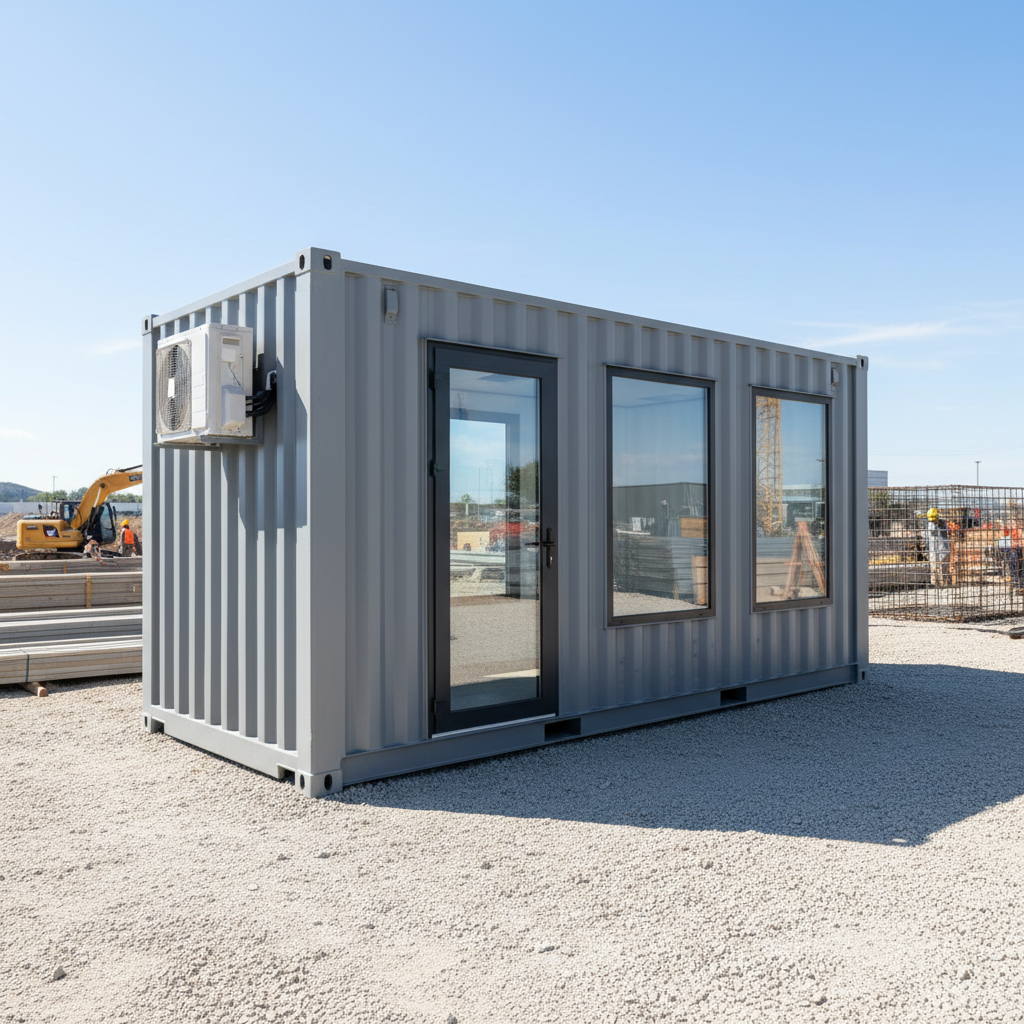
July 2026 has brought some of the highest recorded temperatures across the United States, pushing project managers to prioritize heat safety and worker comfort. For high-stakes job sites, a standard steel box isn't enough; you need mobile container office units with hvac that can maintain a steady 72°F while the exterior steel shell hits 120°F in direct sunlight. These units aren't just portable desks—they are engineered environments designed to meet rigorous OSHA cooling requirements and local building codes (AHJ) for occupational health.
Table of Contents
- 1mobile container office units with hvac: Understanding Mobile Office Unit Cooling Options
- 2Specifying Your Insulated Shipping Container Office
- 3Power Requirements for Heavy Duty Container Office HVAC
- 42026 Price Ranges for Climate Controlled Site Offices
- 5Frequently Asked Questions
- 6Selecting the Right Unit for Your Project
- 7Explore Related Products & Guides

mobile container office units with hvac: Understanding Mobile Office Unit Cooling Options
When sourcing a climate-controlled site office, the HVAC system is only half the battle. Without proper thermal breaks and insulation, even a high-BTU unit will struggle against the conductive properties of Corten steel. Most turnkey container office solutions utilize one of three primary cooling setups:
- **PTAC Units:** Similar to hotel AC units. Reliable and easy to replace, but require a large rectangular cutout that can slightly weaken structural integrity if not properly framed.
- **Mini-Split Systems:** The most efficient mobile container office units with hvac typically use these. They offer whisper-quiet operation and high SEER ratings, though the exterior condenser requires secure mounting for transit.
- **Bard / Wall-Mount Units:** Heavy-duty industrial units often found on large modular complexes. These offer high CFM and are built for 24/7 commercial operation in extreme dust environments.
Specifying Your Insulated Shipping Container Office
Effective cooling starts with the envelope. A bare steel container has a negligible R-value. To create a functioning portable office with air conditioning, we focus on high-performance insulation materials. For 2026, closed-cell spray foam remains the industry leading choice because it acts as both an insulator and a vapor barrier, preventing condensation behind the walls.
| Insulation Type | Estimated R-Value | Pros | Best For |
|---|---|---|---|
| Closed-Cell Spray Foam | R-6 to R-7 per inch | Air-tight seal, structural rigidity | Extreme heat/cold climates |
| Rigid EPS Foam Board | R-4 to R-5 per inch | Cost-effective, easy install | Moderate US regions |
| Fiberglass Batts | R-3.5 per inch | Inexpensive | Dry climates (requires vapor barrier) |
Never skip the vapor barrier. Shipping containers are prone to 'container rain'—internal condensation that occurs when warm, moist air hits cold steel. Ensure your unit is built with an airtight seal to prevent rust and mold growth within the wall cavities.
Power Requirements for Heavy Duty Container Office HVAC
A common mistake for first-time buyers is underestimating the electrical load. While a basic 10ft container might run off a standard 110V circuit, most commercial-grade mobile container office units with hvac require a 220V/240V connection to run the compressor efficiently. According to the National Electrical Code (NEC), these units should typically have a dedicated 30-amp to 50-amp shore power inlet or a hardwired subpanel. If you are planning an off-grid setup, you will likely need a significant battery bank or a 5500W+ generator to handle the start-up surge of the AC unit.
Ground Level Office Container Specs
Standard ISO containers have an exterior height of 8'6". Once you add ceiling insulation and HVAC ducting, the interior headroom can feel tight. We recommend starting with a 40ft High Cube container, which provides an extra foot of vertical space (9'6" exterior). This allows for recessed LED lighting and overhead AC cassettes without sacrificing comfort. For smaller footprints, a 20ft office container with heat and ac is the industry standard for easy transport and rapid deployment.

2026 Price Ranges for Climate Controlled Site Offices
Pricing for these units fluctuates based on the cost of the base condition grade and the specific modifications requested. In 2026, a refurbished 20ft used container converted into a basic office starts around $14,000, while a high-spec, new one-trip unit) with premium insulation and a multi-zone mini-split can exceed $28,000.
- 1Base Container Cost: $2,500 – $6,000
- 2Insulation & Interior Framing: $4,500 – $8,000
- 3HVAC System & Electrical Sub-panel: $3,000 – $5,500
- 4Windows, Personnel Door, and Flooring: $3,500 – $6,000
- 5Delivery & Placement: $500 – $2,500 (Location dependent)
For more detailed breakdown, see our 2026 shipping container cost guide.
Frequently Asked Questions
Based on inquiries from site managers and business owners, here are the most common questions regarding portable container cooling.
What HVAC system is best for a container office?
For most US climates, a ductless mini-split is best. It provides high energy efficiency, heat pump capabilities for winter, and takes up zero floor space.
How much do mobile office units with HVAC cost?
Expect to pay between $15,000 and $30,000 for a professionally converted 20ft unit, depending on whether it's built from a 'One-Trip' or 'Cargo Worthy' base.
Are container offices insulated for summer heat?
Standard shipping containers are not insulated. To function as an office, they must be retrofitted with spray foam, rigid board, or mineral wool to prevent overheating.
Do mobile office containers need 220v for HVAC?
While small window units can run on 110V, most commercial-grade HVAC systems (12,000 BTU and up) require a 220V/240V dedicated circuit for optimal performance.
Can I add air conditioning to a shipping container office later?
Yes, but it is far more expensive to strip back finished walls later. We recommend installing the HVAC and electrical infrastructure during the initial build phase.
What is the R-value of an insulated office container?
A standard professionally insulated unit target an R-value between R-13 and R-21 for the walls and ceiling, depending on the thickness of the spray foam used.
Selecting the Right Unit for Your Project
Before you sign off on a purchase, consider the site preparation requirements. Unlike modular trailers, ground-level offices sit directly on the earth, but they still require a level surface to ensure the doors operate correctly. Review our site prep checklist to ensure your location is ready for a tilt-bed or crane delivery. If you are operating in a residential zone or high-visibility commercial area, also consult local permitting regulations as requirements for 'temporary structures' vary by state and municipality.
At Outback Shipping Containers, we specialize in configuring mobile container office units with hvac that withstand the hottest US summers and the most demanding job sites. If you’re ready to compare inventory and discuss custom cooling specifications for your project, our team can pull matching units from our nationwide depots and provide a firm quote including delivery to your zip code.