
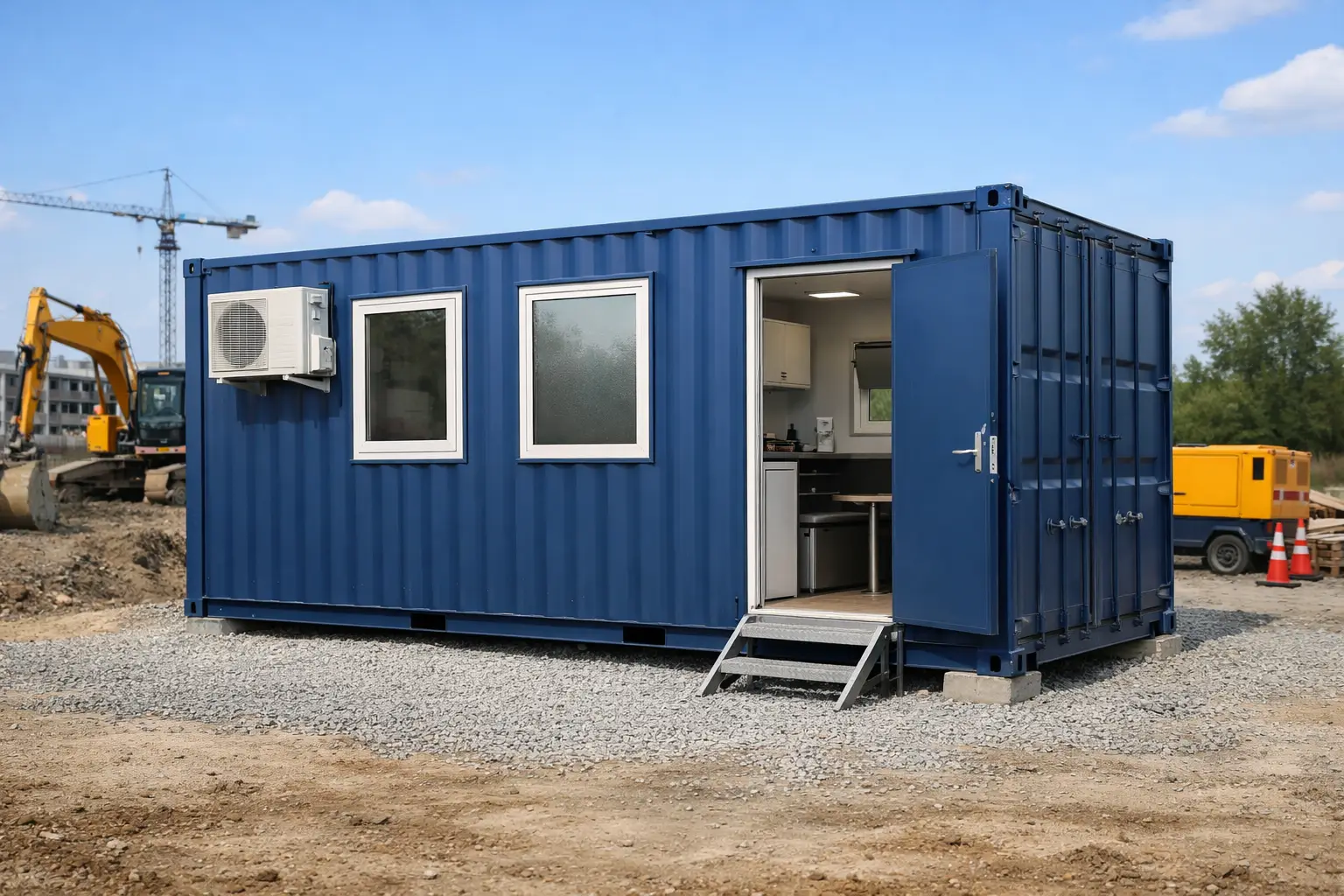
Shipping Container Welfare Unit for Job Sites
A job site runs better when people have a clean, practical place to take a break, wash up, use a restroom, and get out of the weather. A shipping container welfare unit puts those essential facilities where your crew needs them without giving up the durability and security that make containers useful on active sites, farms, industrial yards, and remote properties.
Unlike a basic storage container, a welfare unit is built around people. The right conversion can combine a break area, restroom, hand-washing station, small office, changing space, and utility storage in one steel structure. That makes it a strong fit for operations that need a long-lasting workforce facility they can own, relocate, and adapt as needs change.
What Is a Shipping Container Welfare Unit?
A shipping container welfare unit is a new, used, or custom container converted into a crew support space. Its purpose is simple: give workers a functional place to rest, clean up, eat, change clothes, or handle basic site administration.
The layout depends on the work being done and the utilities available at the location. A construction team may prioritize a restroom and lunchroom. An agricultural operation may need a wash station, changing area, and secure storage for supplies. A contractor managing a large project may add a compact office so the superintendent has a place for paperwork, meetings, and daily planning.
The container shell provides a durable starting point. Steel walls, cargo doors, and a compact footprint make it easier to position a unit near the work area while keeping equipment and interior fixtures protected when the site is closed.
Why Job Sites Need More Than a Break Room
Crew welfare is an operational issue, not an extra. When workers have a designated place to get out of heat, cold, rain, dust, or mud, the site is easier to manage. A properly planned unit also helps keep food, personal items, cleaning supplies, and restroom functions separate from tools and materials.
A fixed building can make sense for a permanent facility, but it is not always practical for temporary projects, expanding operations, or properties without an existing staff area. A container welfare unit offers a more flexible path. It can be delivered to the property, fitted for the intended use, and moved later if the operation changes.
That flexibility comes with a trade-off. Containers are compact by design, so the interior plan matters. Trying to force a restroom, kitchenette, changing room, office, and large break area into a small container can make each space feel cramped. It is usually better to identify the daily priorities first, then select the container size and configuration that supports them.
Choosing the Right Container Size
A 10-foot container can work for a focused utility setup, such as a single restroom with a small wash area or a compact site office. It is best for limited-space applications where the unit will serve a small team and does not need a full break room.
A 20-foot container is often a practical middle ground. It can accommodate a restroom area and a modest crew space, or it can be divided into an office and welfare section. For contractors who need a manageable footprint without sacrificing core amenities, this size is often worth considering.
A 40-foot container gives you more room to separate functions. It can support a larger break room, multiple restroom fixtures, storage, an office, or a changing area. High-cube containers add interior height, which can be useful when planning insulation, ceiling finishes, lighting, HVAC equipment, and more comfortable headroom.
The number of people using the unit matters as much as the site footprint. Think about peak crew count, shift overlap, how long workers will be inside at one time, and whether the unit needs to support visitors or subcontractors. A welfare space that feels adequate for five people may not work well when a larger crew arrives for lunch at the same time.
Layout Features That Add Real Value
The best layout begins with the daily routine. Where will people enter? Where will muddy boots, work gear, and wet clothing go? Does the restroom need privacy from the break area? Will food preparation be limited to a countertop and microwave, or does the unit need more kitchen capacity? Shipping Container Welfare Unit for Job Sites
A typical shipping container welfare unit may include insulated interior walls, finished flooring, lighting, electrical outlets, HVAC, windows, personnel doors, and ventilation. These upgrades turn a cargo container into a usable work environment rather than a bare steel box. Shipping Container Welfare Unit for Job Sites
Restroom and wash areas need careful planning because plumbing connections, water supply, drainage, and waste handling affect the final design. If utility connections are not available, the unit may need a configuration suited to the service arrangement planned for the site. Discussing this early prevents a layout from being designed around equipment that does not fit the actual location. Shipping Container Welfare Unit for Job Sites
For food and breaks, simple features often have the biggest impact: durable counters, seating space, a sink, storage cabinets, and enough outlets for common appliances. A compact table may be more useful than oversized furniture, especially in a 20-foot layout. Select finishes that are easy to clean and suited to boots, dust, and frequent use. Shipping Container Welfare Unit for Job Sites
Plan Utilities Before Ordering
A welfare unit needs more than a good floor plan. It needs a realistic utility plan. Start by identifying how power will reach the container and what equipment will run inside. HVAC, water heaters, lighting, outlets, refrigeration, and kitchen appliances can all affect electrical requirements. Shipping Container Welfare Unit for Job Sites
Water and wastewater should be considered at the same time. A unit with restrooms and sinks needs a clear plan for supply and discharge. The site may have existing connections, or it may require an alternative setup based on local service availability and the intended use of the unit. Shipping Container Welfare Unit for Job Sites
Climate also affects the conversion. In hot, humid Gulf Coast locations, cooling capacity, insulation, ventilation, and moisture management deserve attention. In colder regions, insulation and heating become more important. The same container size can perform very differently depending on the climate, how often doors open, and how many people use the space during a shift. Shipping Container Welfare Unit for Job Sites
New, Used, or Custom-Built?
New containers can be a good choice when appearance, long-term ownership, and a clean starting point are priorities. Used containers may be suitable when the project calls for a practical shell and the conversion plan is the main focus. The best option depends on the unit's intended service life, appearance expectations, budget, and the level of customization required. Shipping Container Welfare Unit for Job Sites
Custom-built welfare units are especially useful when standard layouts do not match the job. You may need an office on one end, a restroom in the center, and a break area on the other. Or you may need personnel doors and windows positioned to work with traffic flow on a narrow site. A conversion should support how the crew actually works, not make the crew work around the container. Shipping Container Welfare Unit for Job Sites
When comparing options, ask for clear details on container dimensions, interior features, door and window placement, insulation, HVAC, electrical components, plumbing provisions, and the delivery plan. A good purchase decision is based on the finished unit, not just the exterior container size. Shipping Container Welfare Unit for Job Sites
Delivery and Site Readiness
Before delivery, confirm that the truck has a workable access route and that the placement area is clear, level, and ready for the container. Consider overhead obstructions, gate width, turning space, ground conditions, and the direction doors should face once the unit is in place. Shipping Container Welfare Unit for Job Sites
It also helps to decide where utility connections will enter the container before it arrives. Planning the placement around water, power, and wastewater routes can reduce extra work after delivery. For projects outside a primary service area, discuss transportation needs early so the unit and delivery approach are matched to the destination. Shipping Container Welfare Unit for Job Sites
Outback Shipping Containers supplies new, used, and custom container solutions with nationwide delivery options, helping buyers coordinate both the unit itself and the practical step of getting it to the property. Shipping Container Welfare Unit for Job Sites
Make the Unit Fit the Work
The strongest welfare unit is not the one with the longest feature list. It is the one that gives your crew the right amount of usable space, supports the utilities available on site, and stands up to the conditions of the job. Start with the number of users and the daily routine, then build the layout around those facts. Shipping Container Welfare Unit for Job Sites
A well-planned container welfare unit can remain useful long after a single project ends. It may move from one job site to another, serve a growing farm operation, become a permanent staff facility, or be reconfigured as needs change. Request a quote with your preferred size, location, crew needs, and required amenities, then choose a setup that works as hard as the people using it. Shipping Container Welfare Unit for Job Sites