
Table of Contents
A shipping container pool cost is not determined by the container alone. The pool is a complete conversion project: a steel structure must be prepared, modified, waterproofed, fitted with pool equipment, transported, and set into a ready site. For homeowners, contractors, and property managers, the most useful question is not simply, “What does the pool cost?” It is, “What is included in the build I need?” Shipping Container Pool Cost
That distinction prevents surprises. Two container pools can look similar in photos while having very different specifications, equipment packages, delivery needs, and site requirements. A clear quote should reflect the container selected, the level of conversion, and how the finished unit will work on your property.
What Makes Up Shipping Container Pool Cost?
A container pool combines a cargo container with specialized pool construction. The major cost drivers are the container size and condition, structural modifications, interior finish, filtration equipment, upgrades, delivery, and site readiness.
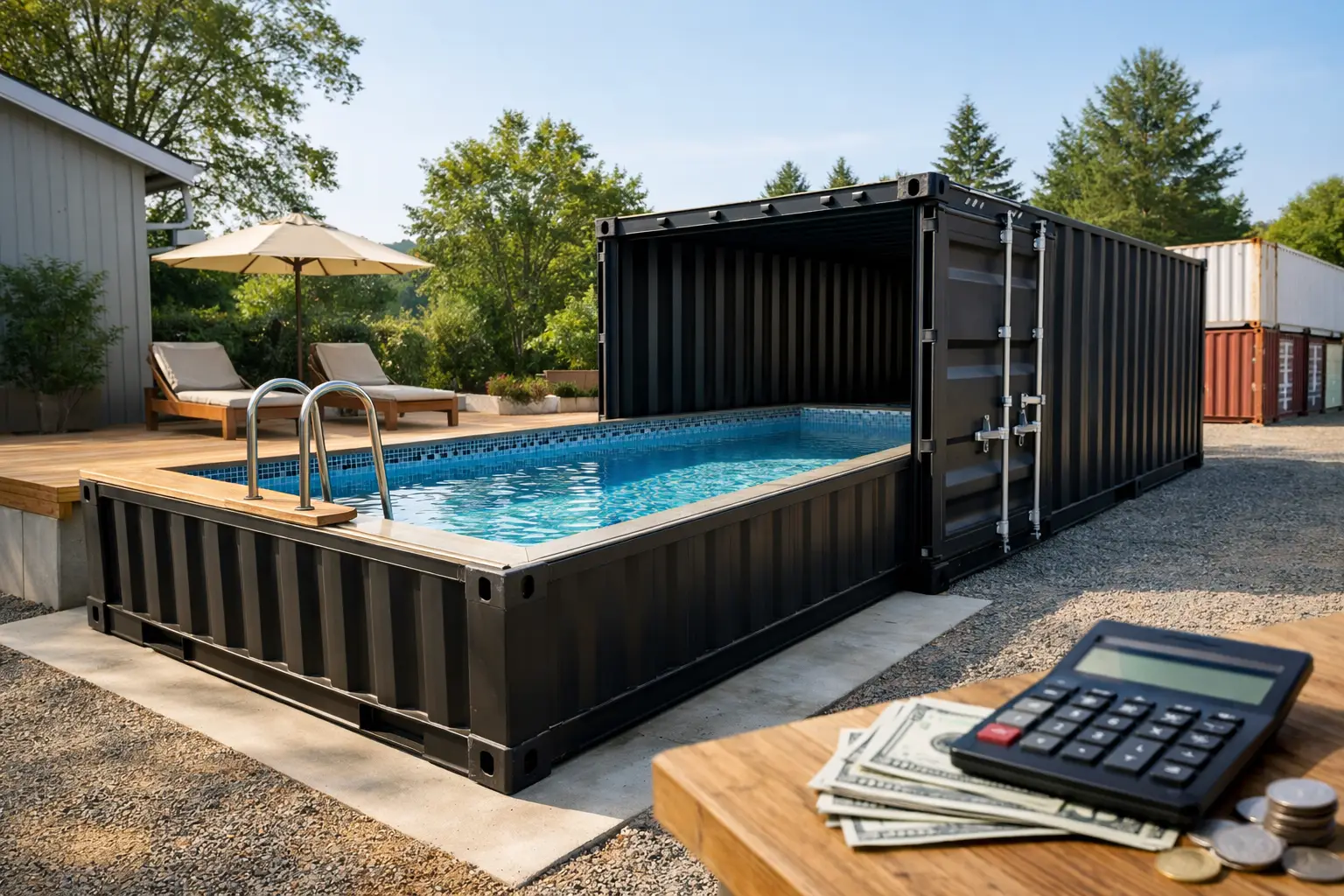
The container provides the basic footprint, but it is not automatically ready to hold water. Water creates sustained outward pressure on the walls, so a pool conversion may require reinforcement and carefully planned openings for access, plumbing, windows, or equipment. The conversion process also needs a durable interior water barrier and a system to circulate, filter, and maintain the water.
This is why comparing a bare container price with a completed pool price does not provide a useful budget. A standard shipping container is the starting material. A finished pool is a purpose-built amenity with mechanical components and custom work.
Container Size Has a Major Effect
Shipping containers are commonly available in 20-foot and 40-foot lengths, and the right size depends on how the pool will be used and where it will sit.
A 20-foot container pool can suit a compact backyard, a guest property, or a space where a plunge-style pool makes more sense than a long swimming lane. It can also simplify placement where access is limited. A 40-foot pool offers more length for swimming, family use, and larger outdoor layouts, but it requires more material, more water, and a larger prepared area.
Width is generally governed by the container's standard exterior dimensions. High-cube containers provide added vertical clearance, which can be valuable when the pool design calls for a deeper water level, raised deck details, or certain equipment configurations. Not every project needs a high-cube unit, but it is worth discussing when depth and finished height are priorities.
Larger is not always better. A pool should fit the available space, intended use, access route, and maintenance expectations. Choosing the right footprint early helps keep the entire project focused.
New or Used Containers Change the Starting Point
The condition of the container affects both appearance and the amount of preparation required before conversion. New or one-trip containers typically offer a cleaner starting point with less prior wear. Used containers may be a practical choice for projects where cosmetic condition matters less or where the conversion plan includes extensive exterior and interior finishing.
For a pool conversion, the container should be evaluated for its suitability before work begins. Existing dents, corrosion, previous repairs, floor condition, and structural integrity can all influence the scope of fabrication. A lower initial container cost does not always mean a lower finished project cost if additional preparation is needed.
The best choice depends on the finish level you want, the planned modifications, and the available inventory near your delivery area. A supplier that handles new, used, and custom containers can help match the base unit to the project instead of forcing every pool build into the same starting point.
Conversion Features Drive the Difference
The conversion scope is usually where container pool budgets begin to separate. A straightforward pool with standard equipment has different requirements than a fully customized backyard centerpiece.
Interior waterproofing is one of the most consequential choices. The selected system needs to create a reliable water-holding surface while standing up to routine pool maintenance. The finish can affect the pool's appearance, cleaning needs, and long-term service considerations.
Filtration and circulation equipment are equally essential. The pump, filter, plumbing layout, drains, returns, and electrical connections must be planned as a working system, not added as an afterthought. Heating, lighting, automated controls, and sanitation options can add convenience and extend the way the pool is used, but each selection changes the overall scope.
Custom features also affect the shipping container pool cost. These may include:
- Windows or viewing panels
- Built-in steps, benches, or safety ledges
- Deck-ready exterior cladding or paint finishes
- Swim jets for exercise-focused use
- Heating and lighting packages
- Equipment enclosures or integrated utility areas
These features can be worthwhile when they support the way you will use the pool. For example, swim jets may make a shorter container pool more useful for fitness, while a viewing panel may be a design priority for a hospitality property or high-visibility backyard. The key is to choose upgrades with a purpose, rather than adding options that do not improve the final use of the space.
Delivery Is Part of the Project, Not an Afterthought
Container pools are substantial fabricated units, and delivery planning matters. Transportation requirements depend on the pool length, weight, destination, road access, unloading space, and final placement location. A site that appears easy to reach can still present challenges if there are tight turns, overhead obstructions, soft ground, or limited room for a delivery vehicle to maneuver.
Before requesting a quote, take clear photos of the access route and planned placement area. Note gate widths, driveways, slopes, trees, utility lines, and any nearby structures. This information helps identify practical delivery considerations early. Shipping Container Pool Cost
Outback Shipping Containers provides nationwide delivery support, which is especially useful when a project requires a custom-built unit shipped beyond the supplier's immediate area. Delivery is available throughout the contiguous United States, with arranged transport options for Alaska, Hawaii, and Puerto Rico. The farther the destination and the more complex the access, the more important it is to discuss logistics before finalizing the build. Shipping Container Pool Cost
Site Readiness Affects the Total Investment
A container pool needs a stable, level location designed to support the loaded unit. The pool itself may arrive complete, but the property still needs appropriate preparation for placement, utility connections, drainage planning, and the surrounding outdoor area. Shipping Container Pool Cost
These project costs are often handled separately from the container pool purchase. That is not a drawback, but it does mean buyers should budget for the full installation picture rather than treating the pool as a stand-alone delivered product. Your installer or local site professional can advise on the work needed for your specific property and planned location. Shipping Container Pool Cost
Think about how people will approach and use the pool once it is in place. A simple gravel-side installation has different needs than a finished patio, deck, retaining-wall, or landscaped setting. Planning these elements alongside the pool conversion helps avoid a finished unit that arrives before the site is ready for it. Shipping Container Pool Cost
How to Request a More Useful Quote
A detailed quote begins with a detailed project description. You do not need every decision made, but sharing the core information allows a supplier to recommend the right container and conversion path. Shipping Container Pool Cost
Start with your preferred length, expected use, delivery ZIP code, and target placement area. Then identify whether you prefer a new or used container, along with the features that matter most: depth, windows, lighting, heating, swim jets, steps, finish style, or other custom details. If you have photos or a simple site sketch, include them. Shipping Container Pool Cost
It also helps to separate must-haves from nice-to-haves. Must-haves are the features necessary for the pool to function as intended. Nice-to-haves can be priced as options, giving you a clearer view of where customization affects the project scope. This approach makes it easier to build toward a practical final design without losing sight of the budget. Shipping Container Pool Cost
Is a Container Pool the Right Choice?
A shipping container pool can be a strong fit when you want a defined rectangular pool footprint, a durable steel exterior, and the flexibility to customize the finish and equipment package. It can work well for homes, rental properties, hospitality spaces, gyms, and commercial settings where a conventional pool build may not match the site or timeline. Shipping Container Pool Cost
It may be less suitable when the property needs an irregular pool shape, a very wide swimming area, or a location that cannot accommodate delivery and placement of a large fabricated unit. The right answer depends on the site, use case, and desired level of customization. Shipping Container Pool Cost
The most productive next step is to define how you want the pool to work, not just how you want it to look. With the right container size, conversion features, delivery plan, and prepared site, your quote can reflect a pool built for the property rather than a generic product made to fit it. Shipping Container Pool Cost