
Table of Contents
Shipping Container Delivery Requirements for Sites
A shipping container can be delivered to a ranch, job site, backyard, warehouse, or business property without unnecessary surprises when the location is prepared before the truck arrives. Shipping container delivery requirements mainly come down to one practical question: can a loaded delivery truck safely reach the placement area, unload the container, and leave the property?
For a 10-foot storage unit, a 40-foot high-cube container, or a custom container office, delivery planning protects your schedule, your site, and the container itself. It also helps you choose the right unit and delivery method before you commit to a purchase.
Start With the Delivery Route
The route into your property matters as much as the final placement spot. A container is delivered on a large truck and trailer, and the complete vehicle needs room to travel, turn, and line up for unloading. A narrow driveway that works for a pickup truck may not work for a tractor-trailer carrying a 20-foot or 40-foot container.
Walk or drive the route from the public road to the delivery area. Look for tight gates, narrow bridges, sharp turns, low limbs, soft shoulders, parked vehicles, and steep grades. Consider the full path, not only the last few feet. A delivery driver may need to approach the site in a specific direction so the container can be unloaded in the intended position.
If access is limited, the answer is not always to cancel the project. A smaller container may be easier to place, or a different location on the property may offer a more workable approach. Some sites are best served by arranging the container near the entrance, along a wide drive, or on a prepared pad that is easier for the truck to reach.
Measure Width, Height, and Turning Space
Container trucks need more than a straight, open lane. They need clearance for the vehicle body, trailer swing, and turning radius. Gates, driveways, and access roads should be wide enough for the equipment to pass without clipping posts, fences, landscaping, or structures.
Overhead clearance deserves equal attention. Tree limbs, power lines, communication lines, carports, roof edges, and signs can interfere with a delivery truck or a raised container during unloading. High-cube containers are taller than standard units, and a tilt-bed delivery can require significant overhead space as the container slides off the truck.
Do not trim around live utility lines yourself or assume a driver can work beneath them. If a line crosses the route or placement zone, identify it early and discuss the condition with the appropriate utility provider or qualified professional. The delivery area should be clear before the truck is dispatched. Shipping Container Delivery Requirements for Sites
Prepare Firm, Level Ground
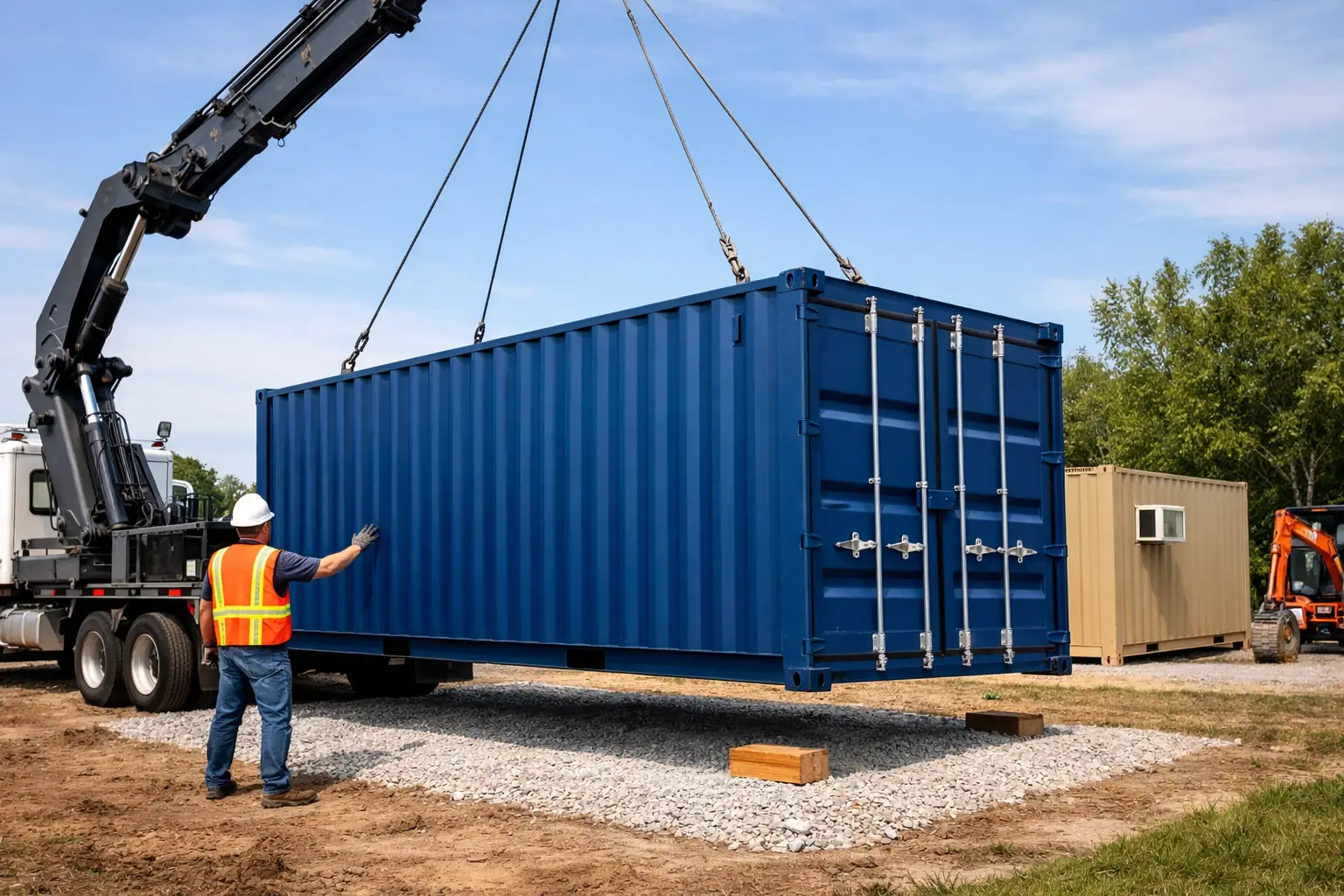
A shipping container is built to carry heavy loads through rail yards, ports, and highways, but it still needs stable support once it reaches your property. Soft soil, loose gravel, mud, standing water, or a steep slope can make delivery difficult and can affect how the doors operate after placement. Shipping Container Delivery Requirements for Sites
Choose ground that is reasonably level, compact, and able to support both the delivery equipment and the container. In many cases, customers prepare a compacted gravel area, concrete supports, railroad ties, or another suitable base design for their intended use. The right choice depends on local soil, drainage, container size, what will be stored inside, and whether the unit is being converted into a workspace, home, pool structure, or welfare unit. Shipping Container Delivery Requirements for Sites
The goal is to support the container at its structural corner points and keep it out of standing water. A container that is twisted or uneven may have doors that become harder to open and close. Proper drainage also helps reduce moisture around the unit and keeps the approach usable after rain. Shipping Container Delivery Requirements for Sites
For a long 40-foot container, check the full length of the placement area rather than relying on a single level spot near the front. Small changes in grade can become more noticeable across a longer footprint. Shipping Container Delivery Requirements for Sites
Plan the Placement Before the Truck Arrives
Mark the container location clearly. Stakes, cones, paint marks, or a visible outline can help show where the front corner should land, where the doors should face, and how much working room should remain around the unit. Remove materials, equipment, vehicles, and debris from the area before delivery day.
Door orientation is a detail buyers often overlook. Think about how you will use the container after it is in place. Storage users may want doors facing the driveway for easy loading. A contractor may prefer doors facing away from public view. A container office or custom conversion may need windows, personnel doors, electrical connections, or HVAC equipment positioned toward a particular side of the property. Shipping Container Delivery Requirements for Sites
Leave enough room to open both cargo doors fully and to move equipment in and out. If the container will store an ATV, tools, farm supplies, inventory, or construction materials, a clear approach to the doors saves time every day. If you are placing multiple containers, leave planned aisles between units rather than setting them so close together that access becomes difficult.
Understand the Unloading Method
The available space at your site influences the unloading method. Tilt-bed or roll-off style delivery equipment may slide the container off the back of the truck. This method requires a straight path and additional clearance in front of or behind the trailer, depending on the setup and final orientation. Shipping Container Delivery Requirements for Sites
The container will not simply drop straight down like a package. It moves during unloading, so the delivery area must be free of obstacles throughout that movement. Slopes, loose ground, overhead barriers, and uneven surfaces can affect whether a specific placement is practical. Shipping Container Delivery Requirements for Sites
Share accurate site details when requesting a quote or arranging delivery. Photos of the driveway, gate, turns, overhead conditions, and final placement area can help identify potential issues before the truck is on the road. This is particularly useful for rural properties, active construction sites, wooded lots, and locations with long private drives. Shipping Container Delivery Requirements for Sites
Have Someone Ready to Receive the Container
An adult who understands the placement plan should be on site during delivery. They should be able to direct the driver to the marked location, confirm which end should face the desired direction, and make quick decisions if site conditions have changed.
That person should have a clear phone number on the order and should keep the access route open. Move parked vehicles, secure pets, notify crew members, and make sure gates are unlocked. On active job sites, coordinate with supervisors so forklifts, dump trucks, material deliveries, and workers are not blocking the route when the container arrives. Shipping Container Delivery Requirements for Sites
A quick walkthrough on the morning of delivery is worthwhile, especially after rain or high winds. Wet ground, fallen branches, fresh construction materials, and new obstructions can change site conditions overnight. Shipping Container Delivery Requirements for Sites
Account for Container Type and Intended Use
Standard 20-foot and 40-foot containers are common choices for equipment storage, tools, inventory, and job site materials. A 10-foot unit can be a strong fit where space is limited or access is tighter. High-cube containers provide extra interior height, but their additional exterior height makes overhead clearance even more relevant.
Refrigerated reefer containers and custom-built units may have operational needs beyond placement access. A reefer unit may need space for inspection, service access, and its planned power arrangement. Container offices, homes, welfare units, and other conversions may include windows, doors, HVAC equipment, or utility connection points that should remain accessible after delivery. Shipping Container Delivery Requirements for Sites
Think through the use of the container before choosing its final orientation. A unit that is easy to deliver but awkward to enter, service, load, or connect can create a long-term inconvenience. A few extra minutes of planning can prevent that result.
Check Local Requirements Separately
Property rules can vary by city, county, neighborhood, business park, and project type. Before ordering, check whether your property has any local requirements that affect the placement or use you have planned. This is especially relevant for permanent installations, converted living or work spaces, and projects involving utility connections. Shipping Container Delivery Requirements for Sites
Delivery access is still the immediate priority. Even a well-selected container cannot be placed efficiently if the truck cannot safely reach the site or the ground is not ready to support the unload. Shipping Container Delivery Requirements for Sites
A Better Delivery Starts With Clear Information
The most useful delivery plan is specific: container size, route into the property, placement area, door direction, ground condition, and overhead clearance. Providing those details early allows the right questions to be addressed before delivery is scheduled.
Outback Shipping Containers supplies new, used, and custom container options with nationwide delivery coordination, so buyers can match the unit to both the job and the site. When you are ready to request a quote, include a few photos and an honest description of access conditions. Clear site information is the simplest way to turn container delivery from a concern into a well-planned next step. Shipping Container Delivery Requirements for Sites