
Table of Contents
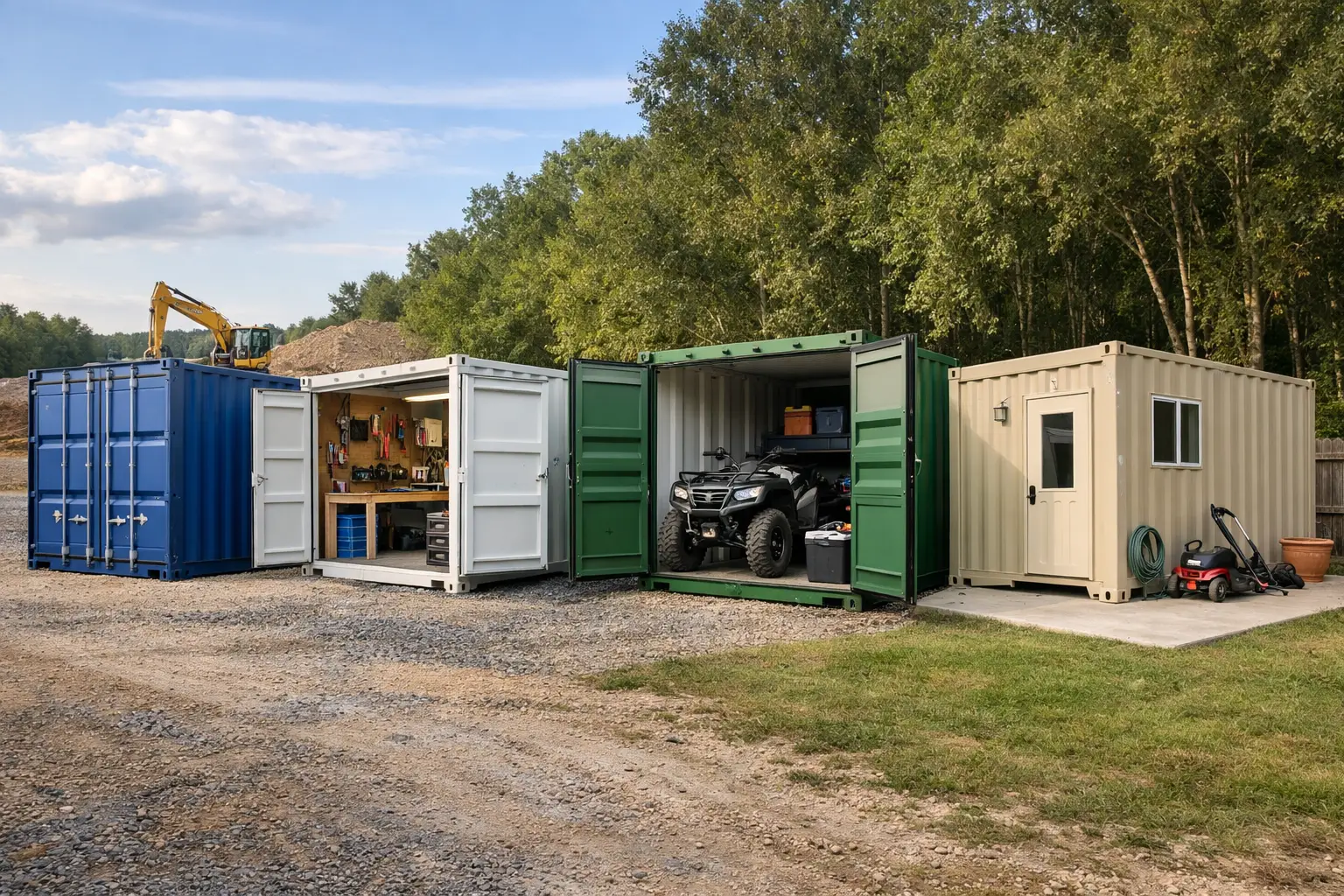
A storage container that is too short creates daily clutter. One that is too large can take up useful yard or job-site space and make delivery more complicated than it needs to be. The best shipping container for storage is the one that fits what you need to protect, how often you need to access it, and the room available for placement and delivery.
For a homeowner storing seasonal equipment, the answer may be a compact 10-foot unit. For a contractor keeping tools, materials, and machinery secure between jobs, a 20-foot or 40-foot container often makes more sense. Start with the actual contents and workflow, then choose the container size, condition, and door configuration that supports them.
Start With What You Need to Store
Do not choose a container by exterior length alone. Make a quick inventory of the items that need storage, including their largest dimensions and how frequently they move in and out. A container used as a long-term archive has different needs than one used by a landscaping crew pulling out equipment every morning.
Think about three practical questions: How much floor space do the items occupy? How tall are they? Will you need a clear aisle from the doors to the back wall? A container can hold a considerable amount, but loading every available inch makes it hard to find supplies, rotate inventory, or remove a single item without unloading half the unit.
Storage use also affects the interior setup. Shelving, pallet racking, workbenches, partition walls, and lighting all use space. If you plan to add those features, allow more room than the bare volume of your stored goods suggests.
Best Shipping Container for Storage: Choose the Right Size
10-foot containers for compact properties
A 10-foot shipping container is a practical choice when space is tight and the storage load is modest. It works well for homeowners with lawn equipment, bicycles, patio furniture, seasonal decorations, or household overflow. Small businesses can use one for documents, supplies, maintenance tools, or spare parts.
Its shorter footprint can be easier to place beside a workshop, behind a retail building, or on a rural property where access is limited. The trade-off is obvious: a 10-foot unit fills quickly if you are storing long materials, multiple pallets, or bulky equipment. Measure trailers, ladders, lumber, pipe, and machinery before choosing the smallest option.
20-foot containers for the most flexible storage
For many buyers, a 20-foot container is the best all-around storage size. It provides enough room for job-site tools, inventory, farm supplies, boxed household goods, and equipment while remaining manageable for many properties.
A 20-foot unit also gives you more flexibility to organize the interior. You can create an aisle, install shelving along one wall, or reserve a section for frequently used supplies near the doors. Contractors often prefer this size because it can function as a secure supply point without consuming as much space as a 40-foot container.
40-foot containers for high-volume storage
A 40-foot shipping container is built for volume. It is a strong option for construction materials, agricultural supplies, business inventory, large equipment, furniture, event equipment, and multi-pallet storage. If your operation regularly outgrows temporary storage areas, one larger unit may be more efficient than trying to manage several smaller spaces.
The main consideration is placement. A 40-foot container needs a long, clear area for the unit itself and for the delivery equipment to access the site. It is also easier to lose track of items if the interior is not organized. Plan zones for inventory, equipment, and access before loading it.
High-cube containers for taller loads
A high-cube container provides extra interior height compared with a standard container. That added clearance matters when you are storing tall machinery, stacked products, large shelving systems, or materials that cannot be laid flat.
High-cube containers are also worth considering for future conversion plans. A taller interior can make a storage unit more comfortable if you later add a workshop area, container office, or other functional space. If every inch of height matters, the added clearance can be more valuable than simply moving to a longer container.
New or Used: Match Condition to the Job
Both new and used containers can serve storage needs well, but the right choice depends on appearance, intended use, and budget priorities. A new container may be the better fit when presentation matters, when the unit will be placed at a customer-facing property, or when you want a cleaner starting point for a custom build. Best Shipping Container for Storage
Used containers are often a practical choice for straightforward storage on farms, job sites, industrial yards, and private property. They have already worked in cargo service, so expect normal signs of use such as exterior wear, surface corrosion, repairs, or cosmetic marks. Ask about the specific unit's condition and inspect the details that matter to your application. Best Shipping Container for Storage
Pay particular attention to the doors, floor, roof area, and visible structural condition. Doors should operate properly for your daily workflow. If the container will store sensitive equipment, records, products, or materials, discuss your needs with the supplier so the available options can be matched to the job. Best Shipping Container for Storage
Door Layout Can Change How Useful Storage Feels
Standard cargo doors at one end work for many storage setups. They are effective when you can load larger items with equipment, place rarely used goods toward the rear, and keep high-turnover supplies close to the entrance. Best Shipping Container for Storage
However, access is often more valuable than raw storage volume. Containers with additional side-door access can be useful for inventory that needs to be reached from several points, long materials that are difficult to retrieve from the end, or operations where teams need a wider loading area. They can reduce the time spent moving products just to reach a single item. Best Shipping Container for Storage
Consider how you will open the doors in daily use. Leave enough clear space in front of the container for the doors to swing and for people, hand trucks, forklifts, or equipment to operate safely. A container placed too close to a fence, building, or pile of materials quickly becomes inconvenient. Best Shipping Container for Storage
Plan the Site Before Ordering
The container itself is only part of the purchase. Delivery access and site readiness determine whether it can be placed where it will actually work for you. Walk the delivery path and look for narrow gates, low branches, overhead lines, soft ground, tight turns, parked vehicles, and other obstacles. Best Shipping Container for Storage
Choose a level, stable location with room around the container for loading and maintenance. The doors need clearance, and the site should allow water to move away rather than collect around the unit. If you expect to add electrical service, interior shelving, security features, or a custom conversion later, plan that layout before the container arrives. Best Shipping Container for Storage
Nationwide delivery makes container ownership accessible beyond major port markets, but every property has different access conditions. Clear photos, measurements, and a straightforward discussion of the site help prevent avoidable surprises. Best Shipping Container for Storage
Consider Storage Needs That Go Beyond Dry Space
Some items need more than a secure steel enclosure. Refrigerated reefer containers are designed for temperature-controlled applications and can be considered for products, materials, or equipment with specific storage requirements. They are not the default answer for general tools or household goods, but they may be the right equipment for food-related operations, agricultural uses, or temperature-sensitive inventory. Best Shipping Container for Storage
Custom modifications can also turn a standard container into a more organized working asset. Added doors, windows, vents, personnel access, shelving layouts, electrical provisions, and interior finishes can support the way your team uses the space. The best time to consider modifications is before the container is delivered, not after it is already full. Best Shipping Container for Storage
Buy for the Next Phase, Not Just Today
The right storage container should solve the immediate problem without boxing you into a poor long-term decision. If you expect inventory growth, seasonal equipment expansion, or a new job-site function, give yourself room to adapt. A 20-foot container may be enough now, while a 40-foot high-cube may prevent a second storage problem a year later. Best Shipping Container for Storage
At the same time, bigger is not automatically better. Choose the size that your property can receive, your team can organize, and your operation can use efficiently. Outback Shipping Containers can help buyers compare new, used, and custom options, coordinate nationwide delivery, and explore financing availability. Bring measurements, photos of the site, and a clear list of what you need to store - those details lead to a container that keeps working long after the first load goes inside. Best Shipping Container for Storage